We all love happy Japanese phrases…
And encouraging Japanese phrases…
But what about phrases you don’t want to hear? Phrases like… “You’ve gained weight?” Or, “it’s not you, it’s me?” Anyway, this guide is filled with Japanese phrases you don’t want to hear.
Just in case… you know… you want to hear ’em.

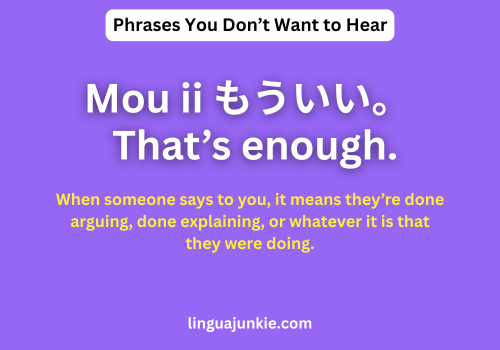
1. Mou ii
- もういい。
- That’s enough.
- Casual
When someone says to you, it often means they’re done arguing, done explaining, or whatever it is that they were doing.
2. Chotto hanashi ga arun da kedo…
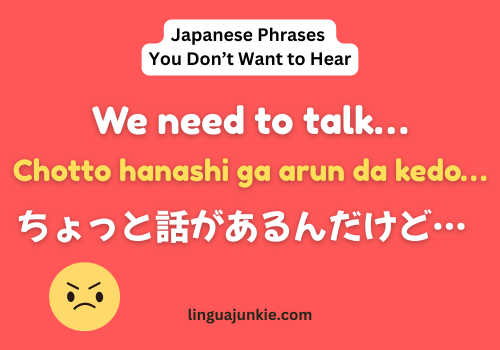
- ちょっと話があるんだけど…
- We need to talk…
- Casual
You’ll hear this before sine bad news.
Whether it’s a breakup or a complaint, this phrase rarely means something lighthearted. You brace yourself the moment you hear it.
3. Genki nai ne.
- 元気ないね。
- You don’t look well.
- Casual
It might seem caring, but it means your low energy is showing. Whether you’re tired, sick, or emotionally off… you look awful and everyone can see it. And they let you know.
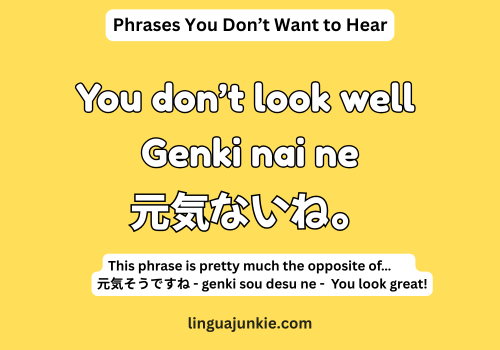
This phrase is pretty much the opposite of…
- げんきそうですね。
- 元気そうですね。
- You look great!
4. Mou sukoshi ganbatte.
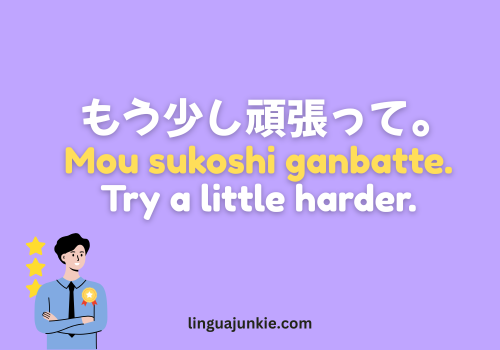
- もう少し頑張って。
- Try a little harder.
- Casual
On the surface this feels like an encouraging Japanese phrase, but it can land the wrong way.
Especially if you’ve already been trying your best…. and someone tells you, “well, why don’t you ganbatte some more, huh?” It implies you’re falling short.
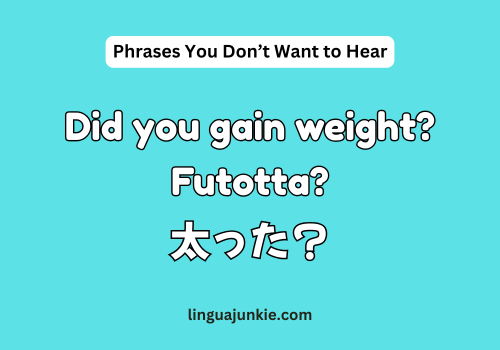
5. Futotta?
- 太った?
- Did you gain weight?
- Casual
Short and direct… way to ask and imply that you’ve gained weight. Would you want to hear this?
Even if it’s asked curiously, it never feels good.
This phrase is often said without thinking, especially by relatives or friends.
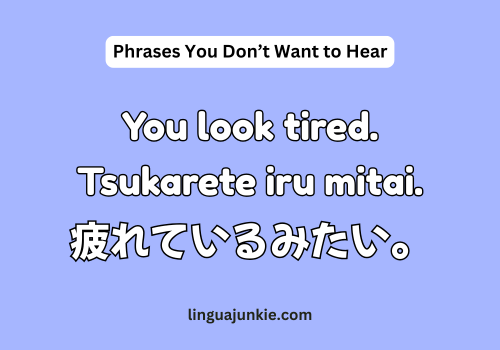
6. Tsukarete iru mitai.
- 疲れているみたい。
- You look tired.
- Casual
Even if meant kindly, this line can make you feel self-conscious.
Like, what do you mean I look tired?!
It often implies you’re not looking too good there, buddy. You’ll hear it at school, work, or even on a date.
7. Sore wa chotto…
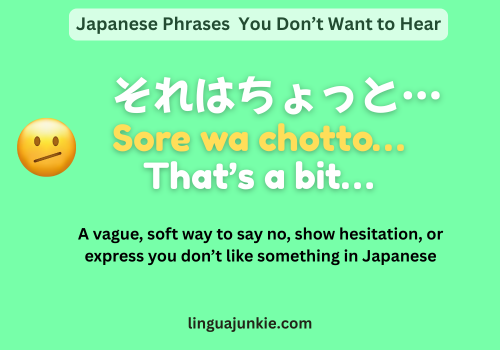
- それはちょっと…
- That’s a bit…
- Casual
Chotto means “a little” or “a bit,” but you’ll often hear it when someone wants to say, “that’s a little…. uhh, not to my liking.” Except that red part goes unsaid in real life.
It’s the most polite way to say no in Japanese… without actually saying it. The more drawn-out the “chotto,” the more definite the rejection. You’ll hear this in everything from dating to business.
8. Kyou wa chotto…
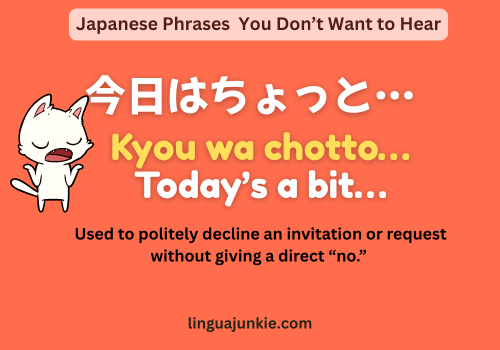
- 今日はちょっと…。
- Today’s a bit…
- Casual
Here’s another chotto phrase.
If someone asks you to go out, you might say 今日はちょっと… and trail off, implying “I can’t today” or “Today’s not good.”
This is the ultimate vague refusal. It leaves the sentence unfinished, but you know exactly what it means: “I can’t” or “I won’t.” It’s polite, but totally noncommittal.
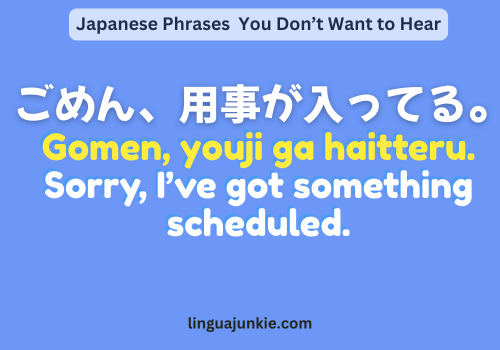
9. Gomen, youji ga haitteru.
- ごめん、用事が入ってる。
- Sorry, I’ve got something scheduled.
- Casual
Youji means errand, task, something to do, or a prior engagement…
And it’s an all-around good, vague word to use when someone wants an excuse. Even if they don’t have a youji.
“Sorry, I got youji. Oh, what youji? Oh, just youji, you know. Either way, guess I can’t.”
This is a polite excuse to say you’re busy. You don’t have to explain what it is… the phrase is vague enough to get you out of anything. Often used to cancel or decline plans.
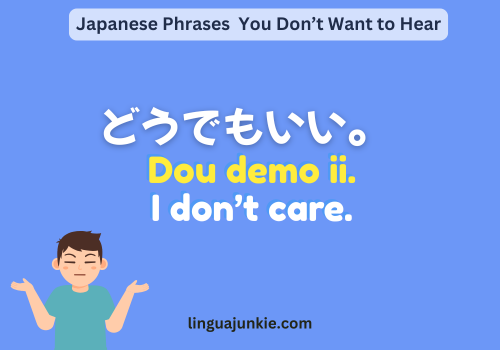
10. Dou demo ii.
- どうでもいい。
- I don’t care.
- Casual
If someone says this to you, they’ve mentally checked out of the situation. It’s dismissive and sometimes cruel.
Literally it means, “Whatever way is fine.”
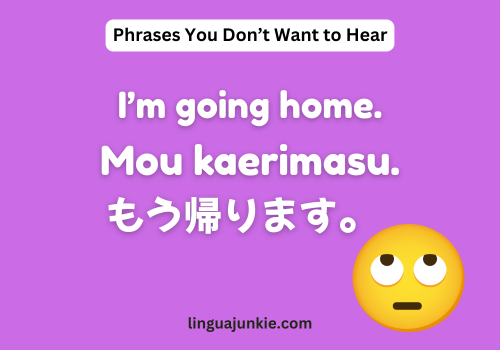
11. Mou kaerimasu.
- もう帰ります。
- I’m going home.
- Casual
When someone abruptly says this, especially on a date or during a fight, something’s clearly wrong.

Whatever happened…. they’re done.
As for you… You’d use it when you’re telling someone that you’re leaving… usually to go home.. and you’re done for the day.
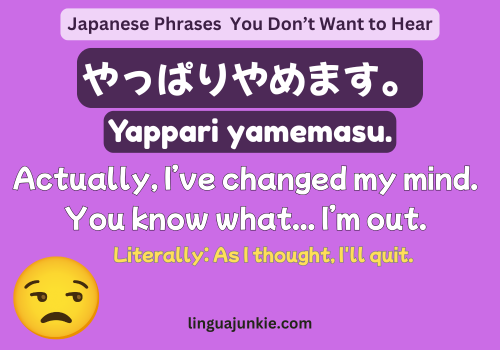
12. Yappari yamemasu.
- やっぱりやめます。
- Actually, I’ve changed my mind.
- Literally: As I thought, I’ll quit.
- Casual
Yappari yamemasu is used when someone changes their mind and decides not to do something, especially after giving it some thought, hesitation, or second-guessing.
You don’t want to hear this phrase from others because it’s a sudden reversal. Whether it’s about plans, jobs, or relationships — it means something just got canceled.
- やっぱり – yappari: as expected / after all / just as I thought
- やめます – yamemasu: I will quit / stop (polite form of verb やめる – to quit)
In English, the closest counterpart is… “You know what… nah,” or “Screw this, I’m out.”
13. Anata to wa chigau.
- あなたとは違う。
- You and I are different.
- Casual
This sentence draws a clear line between “me” and “you.”
All thanks to the verb, “chigau,” meaning “to differ” or “be different.”
It can come off as cold and dismissive in arguments. It’s a step away from connection.
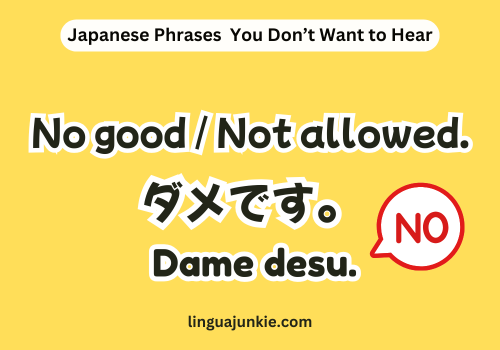
14. Dame desu.
- ダメです。
- No good / Not allowed.
- Formal.
It’s a flat-out no. Whether it’s from a teacher, boss, or hotel clerk — there’s no room to argue. Short and final.
You’ll hear “Dame desu” when something is not allowed, not working, or simply a firm “no.”
And the word itself, ダメ/dame, literally means “no good” or “not allowed.”
The casual is…
- ダメだ。
- No good / Not allowed.
15. Shikatanai ne.
- 仕方ないね。
- It can’t be helped.
- Casual
This is used when someone gives up or accepts something unpleasant. It can feel like resignation or indifference. Not what you want to hear if you’re hoping for a solution.
Now, there’s also the popular phrase, しょうがない (shouganai).
Both express resignation and “it can’t be helped,” but shouganai often sounds lighter or more casual, while shikatanai can feel a bit heavier or more serious…
Which is why you’d not want to hear it.
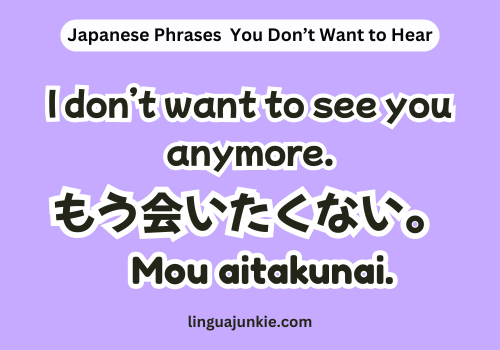
16. Mou aitakunai.
- もう会いたくない。
- I don’t want to see you anymore.
- Casual
もう/mou means “anymore” or “already,” and 会いたくない/aitakunai is the negative of the verb “au” meaning to meet. So, it means “don’t want to meet (you).”
This is a clear way of saying the person wants to end the relationship or stop contact. You don’t want to hear it because it leaves no room for fixing things… it’s final and hurts.
By the way, the opposite phrase is a way to say I miss you in Japanese.
- 会いたい
- Aitai
- Literally: I want to meet you
- Meaning: I miss you
17. Issho ni irarenai.
- 一緒にいられない。
- I can’t be with you.
- Casual
Straight-up breakup line. It might come after a long discussion, but this is the sentence that ends it. There’s no softening this one.
Issho ni means “together,” and irarenai means “can’t stay,” so the full sentence means “I can’t be with you.”
18. Wasurechatta.
- 忘れちゃった。
- I forgot.
- Casual
It’s said casually, but if someone forgot something important… plans, homework, your birthday… it stings.
The “chatta” ending makes it sound light, which can feel worse…. like “oopsie, oh nooo, heeheehee, i forgot, silly me.”
Sometimes it sounds like they didn’t care enough to remember.
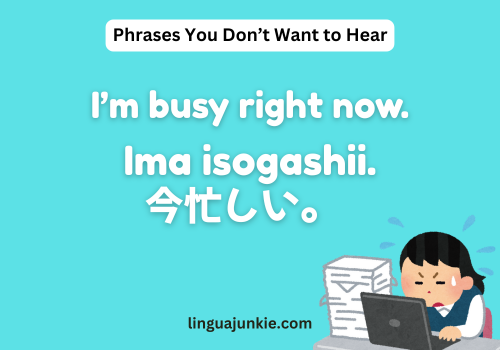
19. Ima isogashii.
- 今忙しい。
- I’m busy right now.
- Casual
This is often used to brush people off. Even if it’s true, the tone can feel cold or uninterested. It can easily shut down a conversation or connection.
- Ima – now
- Isogashii – busy
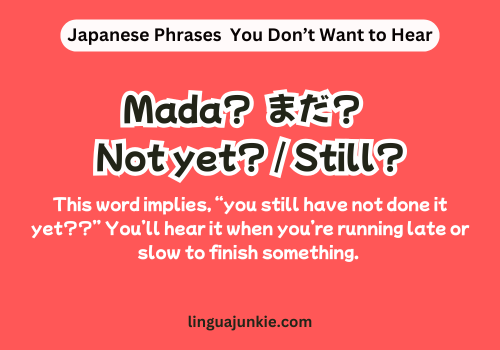
19. Mada?
- まだ?
- Not yet? / Still
- Casual
This single word can pressure you when you’re running late or slow to finish something. You’ll hear it in class, at work, or from annoyed friends.
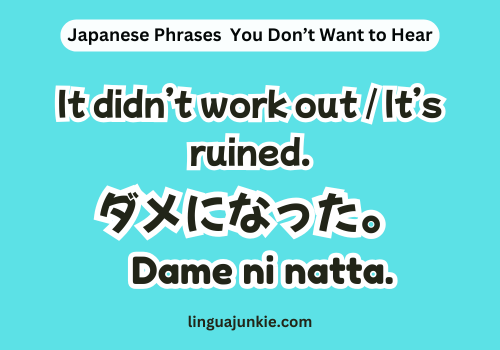
20. Dame ni natta.
- ダメになった。
- It didn’t work out / It’s ruined.
- Casual
This phrase shows up when plans fall through, things go wrong, or just break.
Like, a broken smartphone, a spoiled party, or a canceled trip. Whatever it is… it’s ruined and no longer happening.
Grammatically, it uses dame (no good) + ni naru (to become) in past tense (natta)
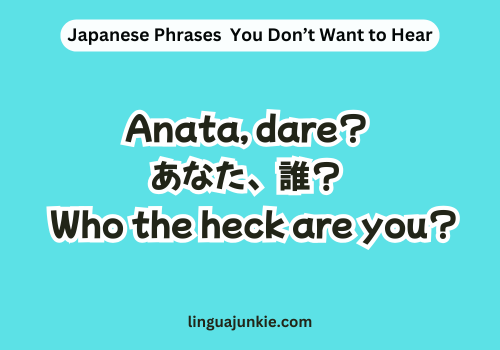
21. Anata, dare?
- あなた、誰?
- Who are you?
- Casual
Sometimes used with attitude, this phrase puts you on the defensive fast. It can sound accusatory or skeptical, even if innocent. You’ll feel like you don’t belong.
Kind of like a,”Who the heck are you?!” response when you try to say something.
Anata means “you,” and dare means “who.”
22. Ii wake wa ii kara.
- 言い訳はいいから。
- Enough with the excuses.
- Casual
A harsh sentence that cuts off whatever explanation you were about to give. It suggests the speaker doesn’t trust or believe you. There’s no room left to defend yourself.
By the way, good word to know….
- 言い訳 – iiwake – excuse
23. Sukina hito ga iru.
- 好きな人がいる。
- I like someone else.
- Casual
This phrase ends the conversation fast. It’s polite, honest, and still a gut punch if you had feelings for them. It’s the classic soft rejection line
24. Watashi-tachi, awanai kamo.
- 私たち、合わないかも。
- Maybe we’re not a good match.
- Casual
This is the polite, less brutal breakup phrase. “Awanai kamo” suggests incompatibility, not blame. But it’s still a goodbye.
25. Ki ni shinaide.
- 気にしないで。
- Don’t worry about it.
- Casual
A vague brush-off, often used to avoid confrontation. The more cheerful it sounds, the more likely they do care and don’t want to say it. It can feel dismissive.
26. Koko made ni shiyou.
- ここまでにしよう。
Let’s end it here.
A clear, gentle breakup line. It might come after a calm talk or long silence. Either way, there’s no misreading it — it’s over.
Casual
27. Nanka kawatta ne.
- なんか変わったね。
- You’ve changed.
- Casual
This phrase is used when someone seems different or has changed noticeably.
It can be good, neutral, or bad depends on the tone. This phrase can be taken as a compliment if said with a smile or curious voice.
But in a flat or cold tone, it often sounds like quiet criticism… which is what you wouldn’t hear.
The tone says everything… it can mean they don’t like who you’re becoming.
28. Sonna ni nakanaide.
- そんなに泣かないで。
- Don’t cry so much.
- Casual
Said when you’re vulnerable, this can feel cold or impatient. It sounds more like “stop” than comfort. Not what you want when you’re not feeling good.
29. Watashi dattara sonna koto shinai.
- 私だったらそんなことしない。
- If it were me, I’d never do that.
- Casual
The good old, “yeah, if I were you… I’d be smarter.”
It sounds like judgment…. even if they pretend it’s just their opinion. It can come across smug or superior. It implies you messed up.
30. Itsu made neteru no?
- いつまで寝てるの?
- How long are you going to sleep?
- Casual
This is the morning wake-up attack. It sounds simple, but there’s always judgment behind it. It implies laziness or wasting time.

You’ll often hear it from parents.
31. Zutto asonderu yo ne.
- ずっと遊んでるよね。
- You’re always just playing around.
- Casual
Zutto means “always” or “constantly,” asonderu is the casual present continuous form of the verb “asobu” — to play/hang out,” and yo ne adds emphasis and seeks agreement.
This sentence bluntly points out that you’re always just playing around or not doing anything serious.
Are you always playing and don’t doing anything important…? Like learning Japanese?
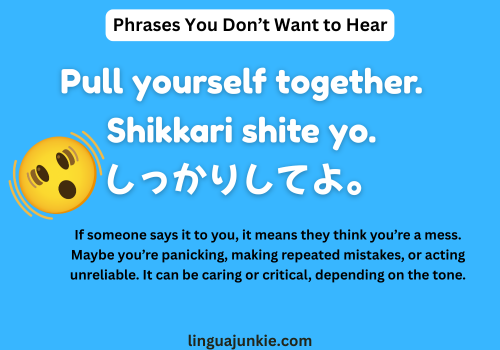
32. Shikkari shinasai.
- しっかりしなさい。
- Pull yourself together.
- Formal
This can be encouraging… or a slap in the face, depending on the tone. It’s used when you’re acting immature, off-task, or not meeting expectations.
A more casual phrase is…
- しっかりしてよ。
- Shikkari shite yo.
- Pull yourself together.
If someone says it to you, it means they think you’re a mess. Maybe you’re panicking, making repeated mistakes, or acting unreliable. It can be caring or critical, depending on the tone.
33. Yaru ki aru no?
- やる気あるの?
- Do you even want to do this?
- Casual
It questions your motivation. Often said by teachers, coaches, or bosses when you seem checked out. It’s meant to guilt you into effort.
やる気 / yaruki means motivation or the willingness to do something.
Do you even have any?
34. Saikin dame dame da ne.
- 最近ダメダメだね。
- Lately, you’ve been really off.
- Casual
This phrase hits hard because it points to a pattern, not just one moment. It implies you’ve been lazy, unfocused, or failing recently. Common in schools or sports.
Repeating dame intensifies the meaning, similar to “totally useless” or “a complete mess” in English.
35. Sugu akirameru ne.
- すぐ諦めるね。
- You give up so easily.
- Casual
A low-key insult that cuts deep. It suggests you lack grit or mental strength. You’ll hear this in classrooms, competitions, or even relationships.
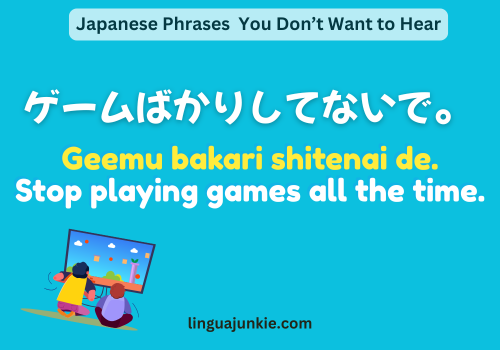
36. Geemu bakari shitenai de.
- ゲームばかりしてないで。
- Stop playing games all the time.
- Casual
A classic parent phrase. It implies you’re wasting time and not doing anything productive. You’ll hear it from siblings too if they want a turn.
The word bakari (explained here) emphasizes that someone is doing nothing but playing games.
37. Sumaho bakari shiteru ne.
- スマホばかりしてるね。
- You’re always on your phone.
- Casual
“Bakari” again here. It adds the nuance of “nothing but that.” It’s not meant as a compliment…it says you’re doing that too much.
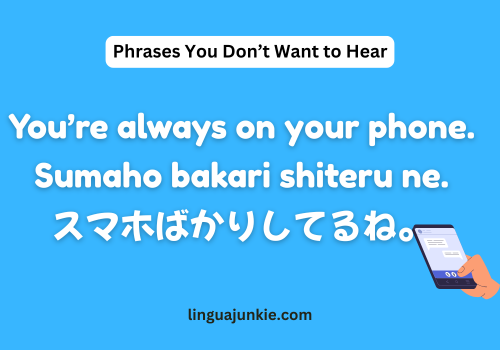
I mean, if someone says that about you… I’d side with them, even if this is a phrase you don’t want to hear. Noone wants to hang out with someone who’s looking at their phone every 3 minutes.
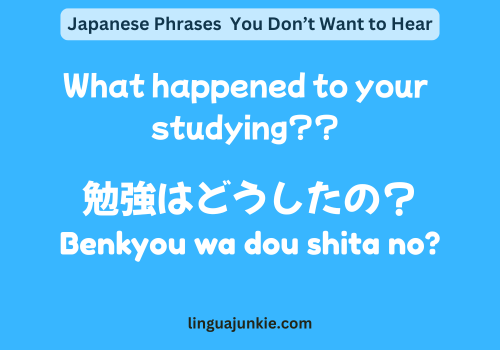
38. Benkyou wa dou shita no?
- 勉強はどうしたの?
- What happened to your studying?
- Casual
Sounds like concern, but it’s really a guilt-trip. It means you’re not doing what you’re supposed to. Would you want to hear it about your Japanese studies? Because if you’re slacking, someone should really tell you…
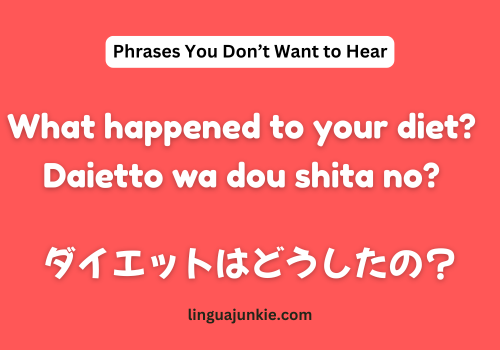
By the way!
You can swap benkyou with other things to guilt-trip someone in a similar way. For example….
ダイエットはどうしたの?
Daietto wa dou shita no?
What happened to your diet?
約束はどうしたの?
Yakusoku wa dou shita no?
What happened to your promise?
あの夢はどうしたの?
Ano yume wa dou shita no?
What happened to that dream you talked about.
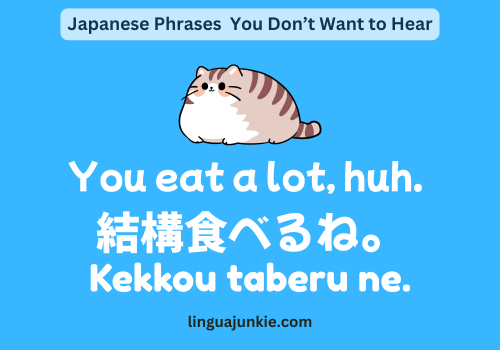
39. Kekkou taberu ne.
- 結構食べるね。
- You eat a lot, huh.
- Casual
It might sound like a casual comment… but it’s always loaded.
They’re saying that you’re eating a bit too much… to the point of it affecting your weight.
- Taberu (verb) – to eat
- Kekkou (adverb) – quite a bit, rather
40. Ki no sei janai?
- 気のせいじゃない?
- Aren’t you just imagining it?
- Casual
Makes you doubt your perception — classic gaslighting. It downplays your feelings by suggesting they’re not real.
41. Omae ga warui jan.
- お前が悪いじゃん。
- You’re the one at fault, aren’t you?
- Casual
“Omae” is a rude way to say you in Japanese.
Shifts all blame onto you — often after they’ve done something clearly wrong.
42. Ore no sei ni suru no?
- 俺のせいにするの?
- You’re blaming me now?
- Casual
“Ore” is a very informal way to say “I,” usually used by males.
Overall, this phrase is said in a defensive tone to twist blame back onto you and avoid accountability.
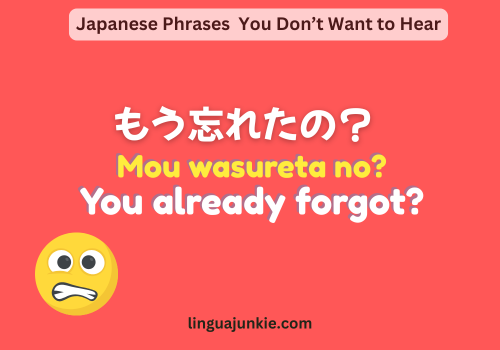
43. Mou wasureta no?
- もう忘れたの?
- You already forgot?
- Casual
Implies you’re careless or confused when you don’t remember something their way — even if they’re wrong.
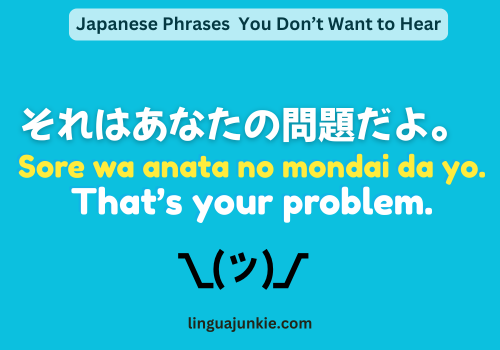
44. Sore wa anata no mondai da yo.
- それはあなたの問題だよ。
- That’s your problem.
- Casual
This phrase dismisses your feelings or concerns by pushing all responsibility onto you.
The keyword here is “mondai,” meaning problem.
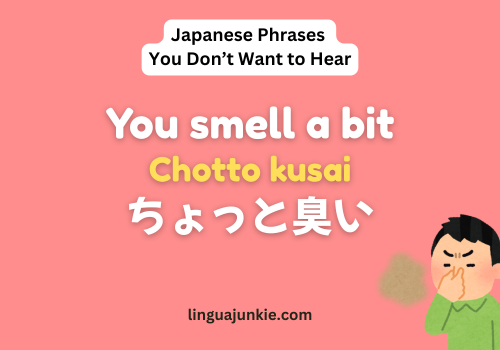
45. Chotto kusai
- ちょっと臭い
- You smell a bit
- Casual
Now this is a phrase you’d HATE to hear, wouldn’t you?
Kusai is an adjective for smelly or stinky. And as we all know, chotto is “a little.”
A similar, less direct phrase that would still make your ears burn is…
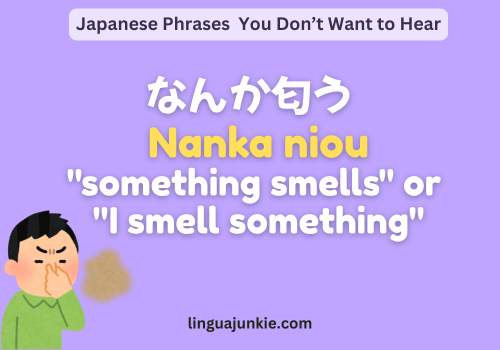
- Nanka niou
- なんか匂う
- Meaning: “something smells” or “I smell something”
46. Daikirai
- 大嫌い
- Daikirai
- I really hate you
Yep, this is how you say I hate you in Japanese.
Most people will definitely NOT want to hear that, right?

Read This Last
Now you know a whole bunch of Japanese phrases…
Japanese phrases that you don’t want to hear.
Like, “did you get fat?”
Which one is your favorite? Err, rather, I mean, which one would you NOT want to hear?
Leave me a comment.
I read ’em all.
The Main Lingua Junks
I need to learn more Japanese
I’m going to bookmark this