The Japanese language is FULL of unique words like “wabisabi,” “komorebi,” and more…
…and people who want to learn these words spend a good 5-10 minutes on this page.
Is that you? If so… I’m here to give you the 100+ beautiful Japanese words.
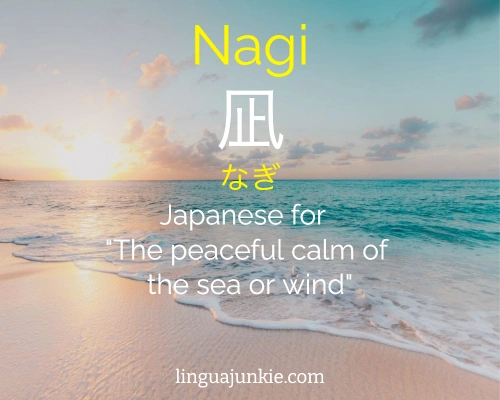
1. Nagi
- Meaning: The peaceful calm of the sea or wind
Nagi refers to calmness (it’s a noun), specifically of the sea.. or wind, when it dies down. If you’ve ever come across a serene sea or ocean with almost no waves, you’ve come across this “Nagi.”

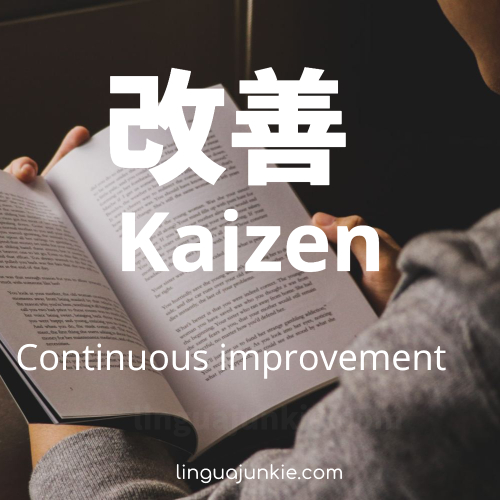
2. Kaizen
- Meaning: Continuous improvement
Literally, it means change for better.
Whether one time or continuously – this is not implied or intended. It’s not until later that it become continuous improvement by the Japanese business world. Toyota kicked it off.
So, now, it’s just a word (used by businesses) to describe the process of “always improving” and getting better.
3. Komorebi
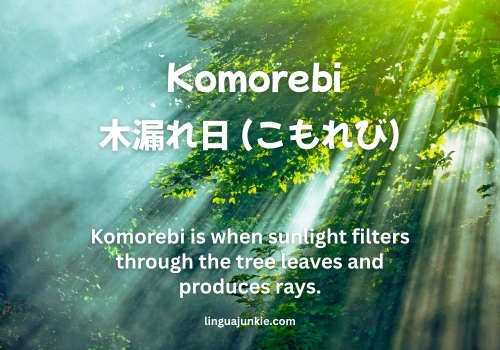
- Meaning: Sunlight filtering through the trees
Komorebi is when sunlight filters through the tree leaves and produces rays.
You know that 木 stands for tree, 漏れ/もれ means leakage and the 日 kanji stands for the sun.
4. Yukigeshiki
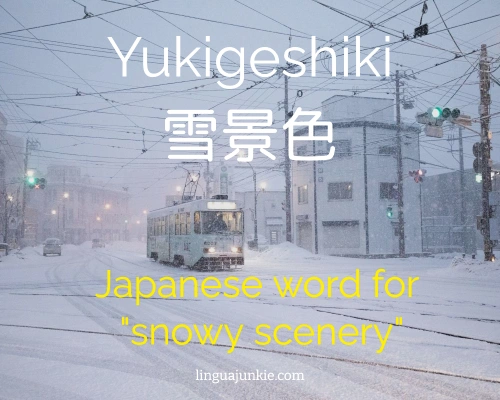
- Meaning: snowy scenery
This beautiful Japanese word is perfect for snowy days.
You can use it to describe the views when everything’s covered in snow — which is always beautiful.
This is a combination of yuki (snow) and keshiki (scenery.)
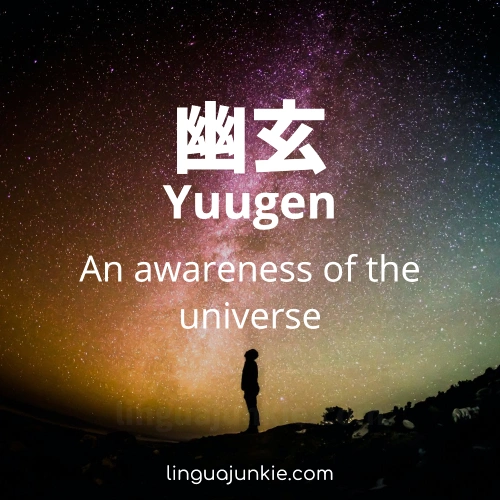
5. Yuugen
- Meaning: An awareness of the universe
Literally it means “subtle grace” or “mysterious profundity.”
This word has different meanings depending on context.
But most of the time, it refers to a profound awareness of the nature of the universe – the oneness of all things – to the point where it affects you emotionally.
Sound vague and odd? Well, don’t worry.
To settle your mind, this word is not translatable and has no English equivalent… so if you’re confused, it’s okay. That’s how language learning works… eventually you “get” it. By the way, if you want to learn, check out my free resources here
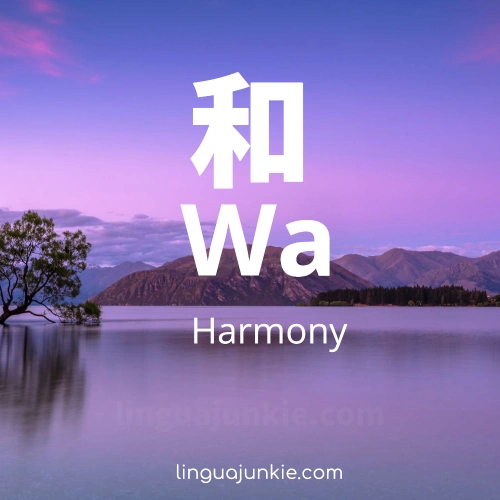
6. Wa
- Meaning: Harmony
This word means peace or harmony.
It implies the importance to of avoiding conflict – so as to maintain the (Wa) harmony.
And it refers to Japan and the Japanese way itself.
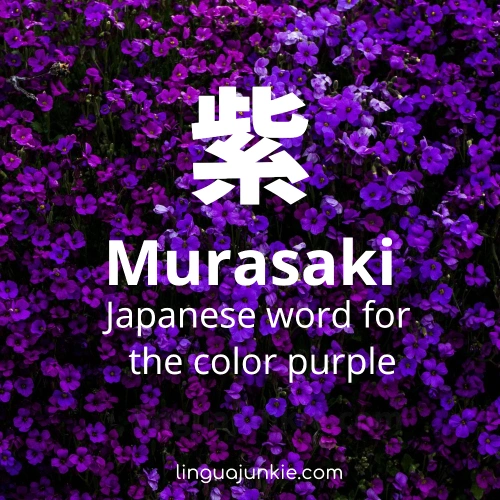
7. Murasaki
- Meaning: Purple
Why did purple make the list of beautiful Japanese words?
Simply because of how it sounds. Say it with me – murasaki!
Okay, there’s more. Back in the old, old days– say around the year 1400 – this color was the color of the upper class and only high level officials and Imperial family could wear it.
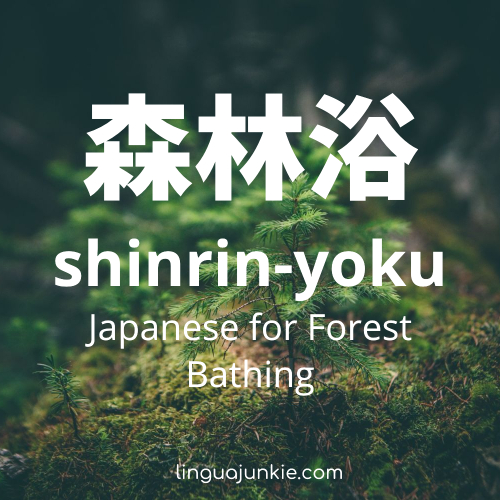
8. Shinrin-yoku
- Meaning: Forest Bathing
Shinrin means forest and yoku stands for bathing. And this refers to being immersed in a forest or talking a walk through the woods. It’s something to do to relax, reduce your stress and improve your health.
And studies confirm that this indeed lowers blood pressure and cortisol.
You can read more about shinrinyoku, how it works and benefits here: shinrinyoku guide.
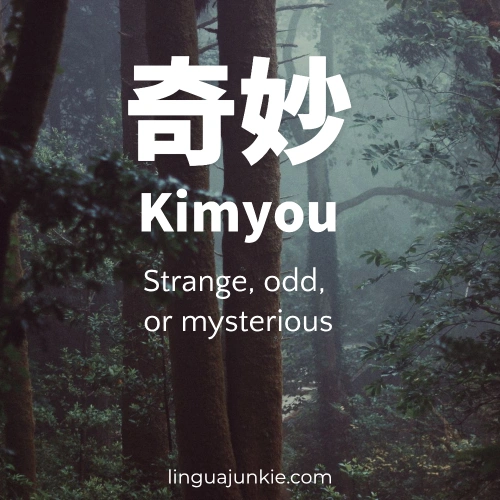
9. Kimyou
- Meaning: Strange, odd, or mysterious
This is a word that can describe things that are strange or odd.
For example, if you suddenly received an anonymous letter, you could use “kimyou.” It can also be used to describe creepy locations like forests, cemeteries, or houses.
10. Ukiyou
- Meaning: Floating World (see explanation)
Now, this isn’t a recent term and you won’t hear it much.
Ukiyo rooted in Japan’s history. It literally does mean “浮 – float” and “世 – world/society.” Although it can also be interpreted as “transient world” or “fleeting life.”
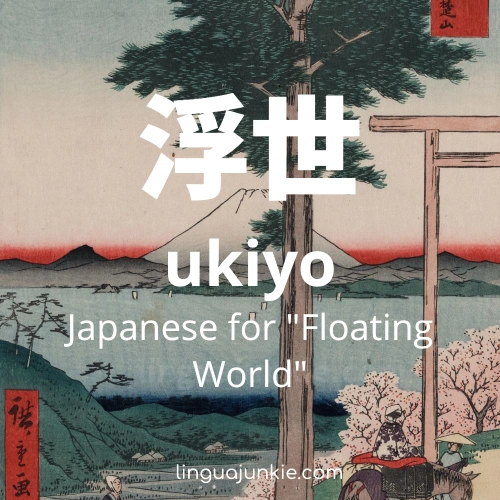
Basically, ukiyo was used to describe Japanese life-style in Edo-period Japan, where normal people escaped the pressures of the samurai state to entertainment/pleasure districts (whether theater, tea-houses, etc.).
11. Hanagasumi
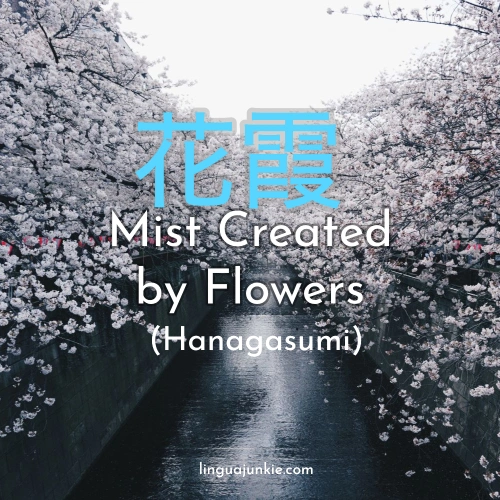
- Meaning: Flower Mist
“Hana” means flower and “gasumi.” What this word refers to is the image of Cherry Blossom trees where the white petals make it look like you’re seeing a mist or haze of white.
12. Kogarashi
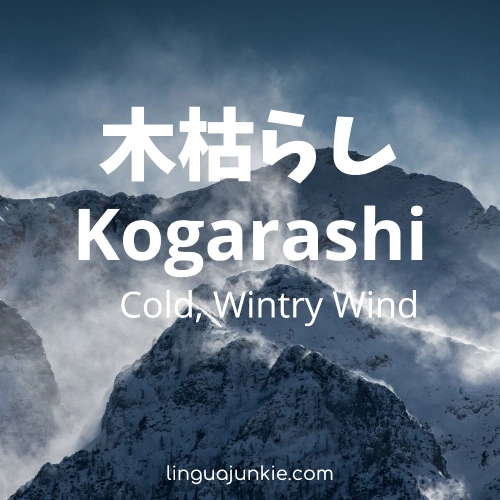
- Meaning: Cold, Wintry Wind
“Kogarashi” is a chilly, cold, wintry wind.
The kind that tells you, “winter is coming.”
The kind that sends the shivers down your spine and gives you goosebumps.
13. Kazahana
- Meaning: Flurry of Snow in a Clear Sky
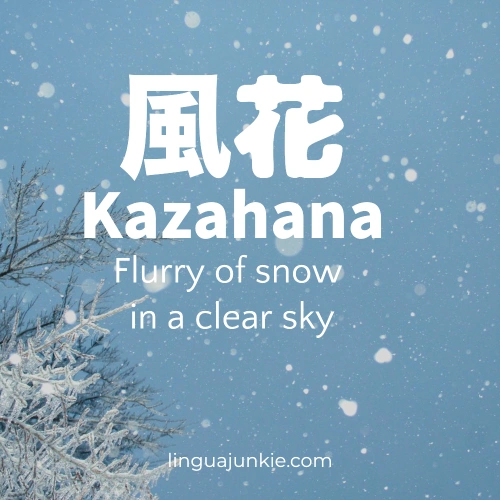
If you go by the kanji, the first one stands for wind and the other one is for flowers.
Except, this word is used to describe snow flurries in the wind. Why the flower comparison though? Well, because it’s kind of like petals in the wind.
14. Ikigai
- Meaning: Reason for Being
As the Japanese say, everyone has an ikigai. It’s what gets you up in the morning. It’s what moves you. What makes your life worthwhile. Work. Hobbies. Goals. Taking care of kids. Learning Japanese. It’s probably why I’m writing this at 3:17AM on a Saturday morning!
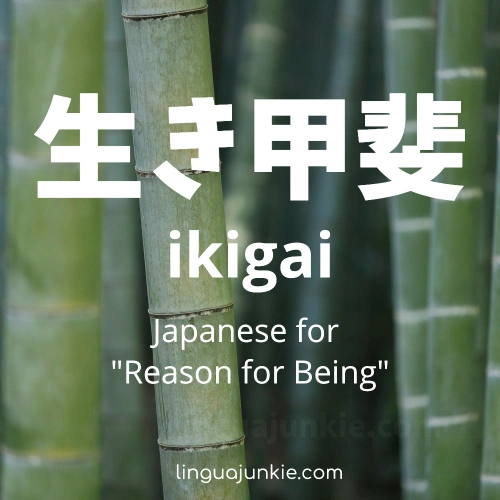
Knowing your ikigai might require a lot of introspection and search. Now, let’s break it down:
- 生き – Iki – Meaning: living or being alive
- 甲斐 – kai (though it’s changed to gai) – meaning: worth or use
What’s your “ikigai?” Leave a comment.
15. Ichi go Ichi e
- Meaning: Treasure every encounter, for it will never recur
This is actually a Japanese proverb; a Zen Buddhist one.
Literally, it means – one time, one meeting. Usually, it’s translated as “one chance in a lifetime.” But the BEST translation is: Treasure every encounter, for it will never recur.
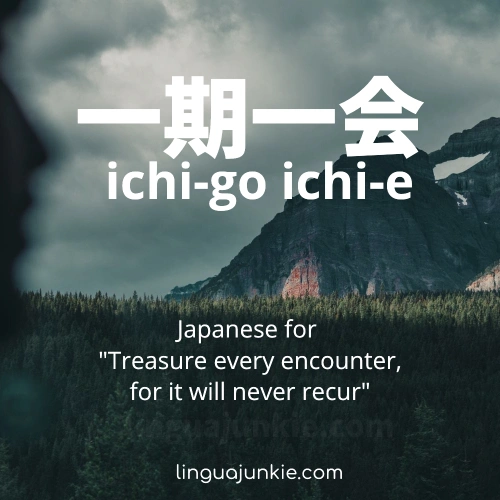
So, that meeting you had with a friend or someone… that EXACT moment and everything that happened will never, ever happen again in this life. It was one of a kind and hence it’s worth treasuring.
Next on the list of beautiful Japanese words…
16. Koi no Yokan
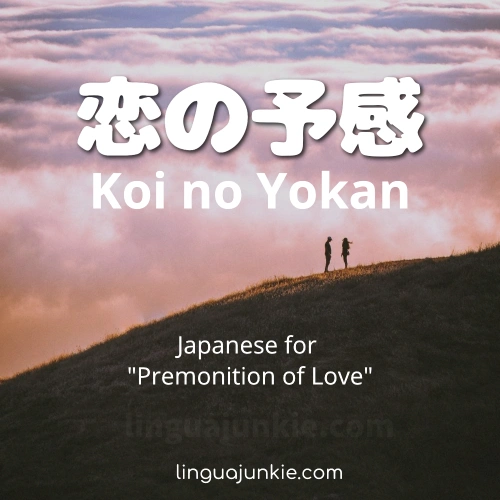
- Meaning: Premonition of Love
This is sort of like love at first sight but not really.
But, it’s not a sappy, head-over-heels, heart-pounding, butterflies-in-stomach “love.” I
It’s a sense you get when first meeting a person – that it’s INEVITABLE that you are going to be in love in the future. Even if you feel no love right now.
- 恋 – koi is one of the Japanese words for love
- 予感 – yokan – premonition
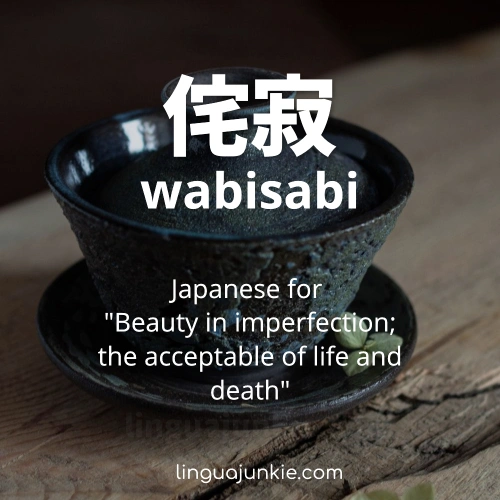
17. Wabisabi
- Meaning: Beauty in imperfection; the accepting of life and death
Wabisabi describes a way of looking at the world.
It’s about accepting the transcience and imperfection of things. And thus, for the time we have left, seeing beauty in the things around us. For example, take a rough, cracked, asymmetrical, simple piece of pottery – seeing beauty in that is wabisabi.
This would be a hard concept to accept for people that like new, shiny and perfect things.
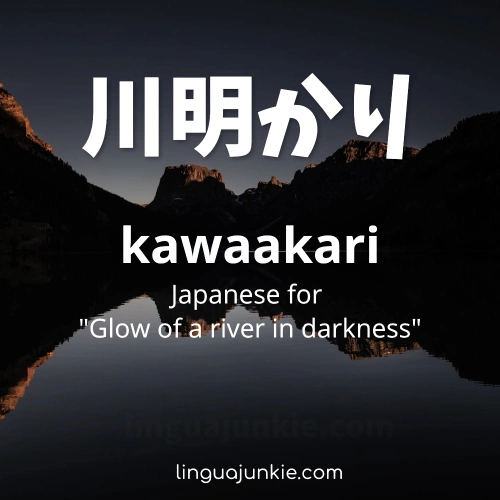
18. Kawaakari
- Meaning: Glow of a river in darkness
It can be the reflection of the moonlight on the river.
Or, it can be the gleam of light on the river during dusk. Here, 川/kawa means river and 明かり/akari means light.
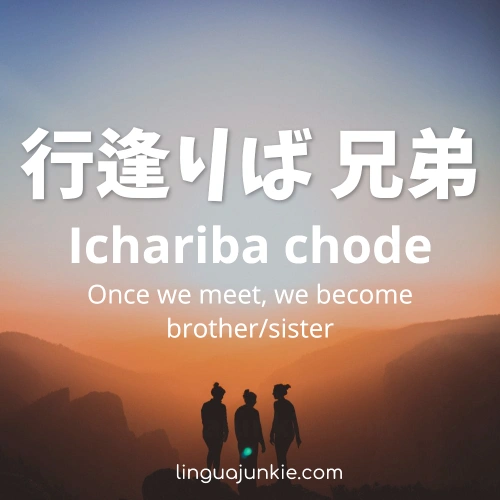
19. Ichariba chode
- Meaning: Once we meet, we become brother/sister
This is the spirit of hospitality and friendliness to strangers.
And more importantly, you go from strangers to brothers or sisters. That kind of hospitality!
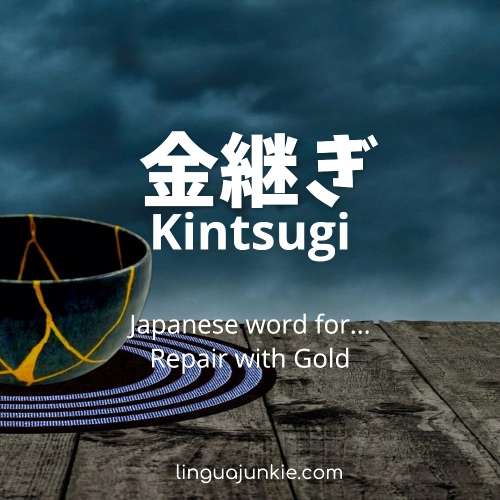
20. Kintsugi
- Meaning: Repair with Gold
Also known as kintsukuroi. This is the art of repairing pottery with gold or silver and making something broken beautiful – usually pottery. This is an example of wabisabi where something imperfect is still beautiful!
So with kintsugi, the big point is… you can take something imperfect or broken, and make it EVEN more beautiful than ever.
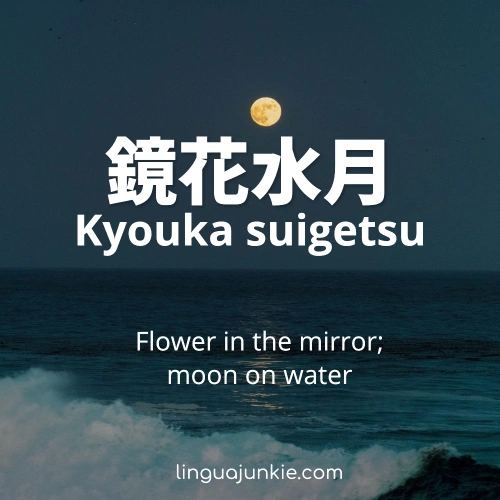
21. Kyouka suigetsu
- Meaning: Flower in the mirror; moon on water
Both, a flower in the mirror and a moon’s reflection on water can’t be touched.
So this Japanese phrase refers to something that’s visible but can’t be touched. Something you can feel (for example, beauty or an emotion) but can’t describe in words.
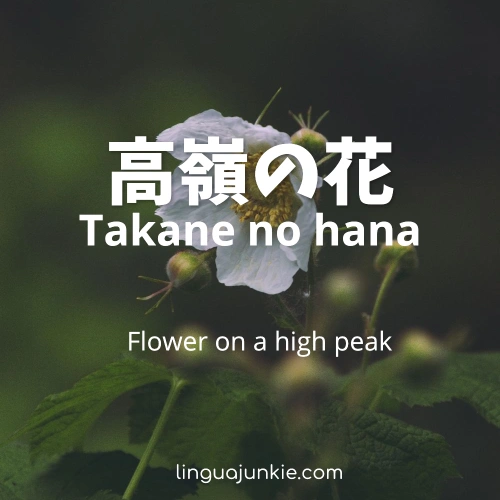
22. Takane no hana
- Meaning: Flower on a high peak
Literally, this means 高嶺/high peak and 花/flower. What it TRULY means is a “goal that’s unattainable.” Something beyond your reach, like a flower!
23. Fuubutsushi
- Meaning: Things which remind of a season
So, anything – feelings, scents, images – that bring memories, thoughts or anticipation of a particular season.
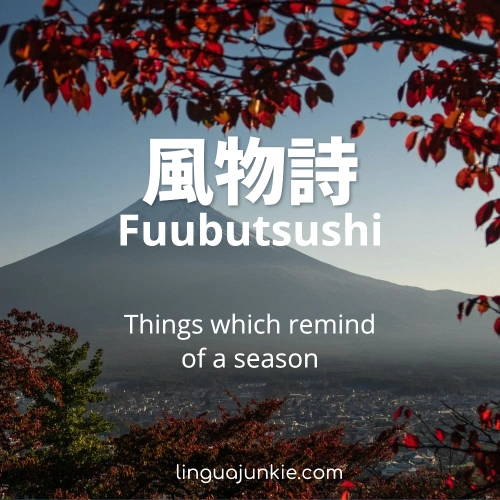
Kind of like when you smell that crisp/burning-like scent in the air, long before snow starts falling, and you know winter is coming. The Japanese love their seasons so there are different foods, different fruit (that are grown) products and decorations for different seasons.
24. Tsundoku
- Meaning: Buying/Piling Up Books without Reading
You know how you add too many shows and movies to your Netflix queue without watching? Or buy too many vegetables that you never eat? The Japanese have a word for this, except with books. Any book lover knows this. They have books they want to read. They want some other books. And with the overwhelm, they don’t get around to any and let them pile up.
This is one of the beautiful Japanese words that I can relate with.

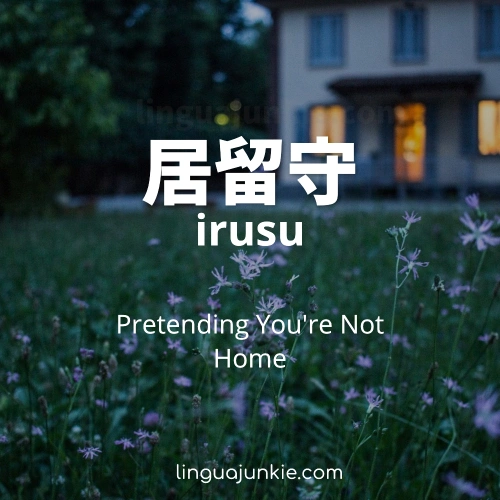
25. Irusu
- Meaning: Pretending You’re Not Home
This word is used to describe you when you flake out on the person at your doorstep. They ring the doorbell. *Ding-dong.* And you, suddenly grow very, very quiet, turn off the lights and hope they go away.
This word is a noun and literally means “pretending to be out.”
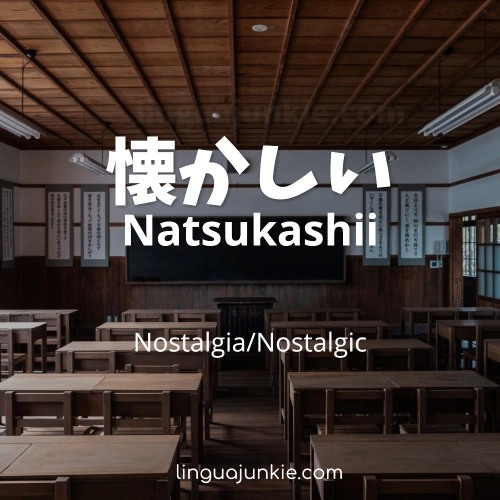
26. Natsukashii
- Meaning: Nostalgia/Nostalgic
Literally, this word means “nostalgic” and is an adjective. But, this carries a lot more meaning and emotion to the Japanese. People don’t normally blurt out “oh, how nostalgic” in English, because no-one likes nostalgia. It’s seen as negative. For the Japanese, it’s something that brings back memories and warms the heart.
27. Kuidaore
- Meaning: Eating Yourself Into Bankruptcy
Let’s break the phrase apart. Kui (食い) means to eat and 倒れ (daore) is a bad debt or collapse. It also comes from the verb 倒れる (daoreru) which means to go bankrupt. How is the word used? It applies to foodies and people that love going out to eat.

28. Shoganai
- Meaning: It can’t be helped
This is a very common and a very Japanese expression. When is it used? People use it as “I can’t do anything about it. I give up.” So, it’s used when things are out of your control (and sometimes when you just don’t want to try hard.)
As much as is this an interesting Japanese phrase, it’s also disliked by others due to the overall “I won’t even try” spirit it carries.
29. Bureikou
- Meaning: Putting everything aside to be yourself
Interestingly, this word sounds like “break.” And indeed, it is a break. This word represents a situation where you can speak freely, act freely and most importantly, enjoy yourself without worrying about your social status, relation to others, pressure or authority.
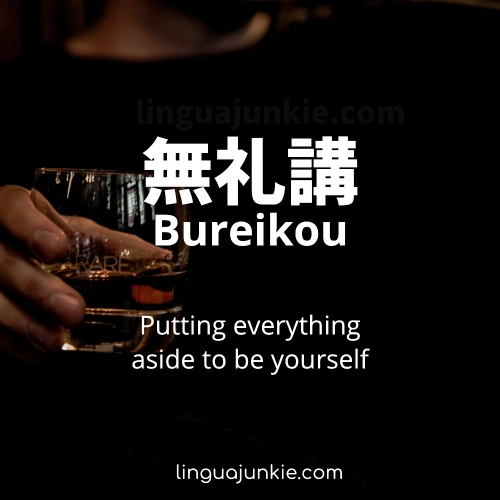
This happens at Japanese company drink-outings where the workers and their bosses get drunk and honest with each other.
30. Arigata meiwaku
- Meaning: An unwelcome favor
Politeness and maintaining harmony is important in Japan. So, when someone does something nice. for someone else… Japanese people are compelled to return the favor. Even if they didn’t ask for the nice thing. This phrase captures that mix of needing to repay the favor as well as the annoyance of having to do it.
31. Shibui
- Meaning: Old School Cool
This is a cool Japanese word to know. And by old school cool, we mean old school cool like Frank Sinatra, Al Capone, old-time cars/cameras and so on.
However, this can also have a negative connotation; “stuff only old people like.”
32. Kachou fuugetsu
- Meaning: The beauty of nature
This is an interesting one.
Especially if you look at the Kanji in this word – 花鳥風月
- flower – 花
- bird – 鳥
- wind – 風
- moon – 月
Flower, birds, wind, moon… all make up elements of nature.
花鳥 (kachou) means “flowers and birds” and 風月 (fuugetsu), meaning cool breeze and bright moon.
33. Hikikomori
- Meaning: Modern Day Hermit
This is a word used to describe someone that’s a recluse and stays in.
Beautiful Japanese words aside, it’s quite an issue in Japan. This word refers to adults or adolescents who have willingly pulled out of social life, interaction and live in extreme isolation. No friends. No contacts. The Japanese Ministry of Health designates this word for anyone that hasn’t left their home in over 6 months.
34. Sakura ame
- Meaning: Sakura petals falling down like rain
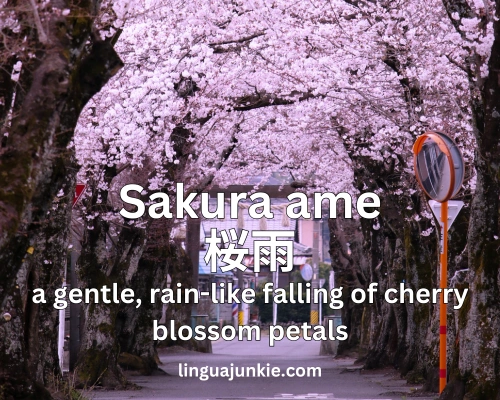
“Sakuraame” (桜雨) is to a gentle, rain-like falling of cherry blossom petals.
Unlike the cherry blossom blizzard / sakura fubuki, this is much more graceful and peaceful. Where petals drift down softly, similar to a light rain.
35. Kasumi
- Meaning: Mist
“Kasumi” (霞) is the Japanese word for mist or haze. If you travel to Japan, especialy to the mountainous areas, you’ll see mist around the mountains.
NOT WEBP
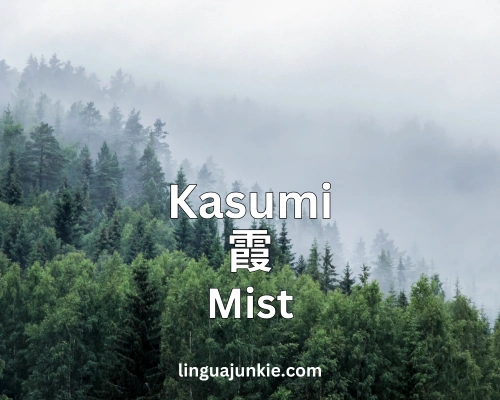
In Japanese aesthetics and culture, kasumi has a dreamy quality in the landscape, partially obscuring elements and creating a sense of mystery. This is highly valued in traditional Japanese art, poetry, and garden design, where the partially hidden is considered more beautiful than what is fully revealed.
Kasumi also happens to be a popular Japanese name and you may have come across it if you’ve watched any shows or anime.
36. Enrai
- Meaning: distant thunder
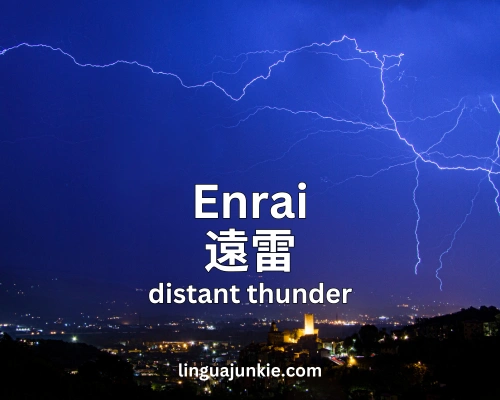
The word combines “en” (distant, far away) and “rai” (thunder).
Enrai is the rumbling sound of thunder that you can hear from far away – that deep, rolling sound that travels across the landscape when a storm is at a distance.
In Japanese culture, enrai carries poetic significance, evoking the feeling of anticipation, the vastness of the natural world, and the atmospheric tension before a summer storm. It’s often used in haiku and other traditional poetry to establish a specific mood or seasonal reference.
37. Kaori
- Meaning: Fragrance
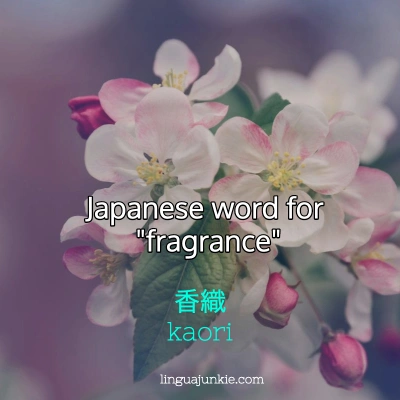
Kaori can be a Japanese female name but also refers to fragrance or smell. If something smells good, you can say “ii kaori desu ne.”
38. Omotenashi
- Meaning: Japanese Hospitality
This word goes above just hospitality. It carries a sense of selflessness obligation to the customer without expecting anything in return. You can see examples of this when store staff bow to you upon entry.
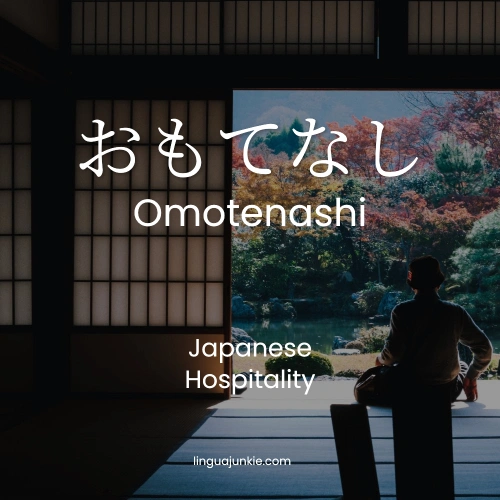
Or, when restaurant staff cheerfully yell “welcome.” It’s even as subtle as a toothpick automatically provided inside your pair of chopsticks. Careful thoughtfulness, eh?
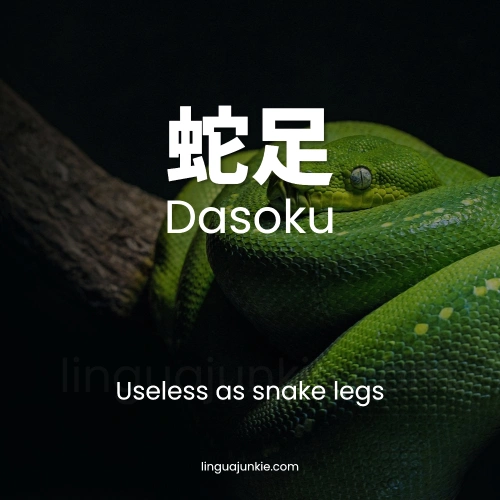
39. Dasoku
- Meaning: Useless as snake legs
So, the word means useless. Where do the snake and legs come from? The first character, 蛇, represents snake and the second one, 足, is legs. When you want to say something is useless or redundant, use this.
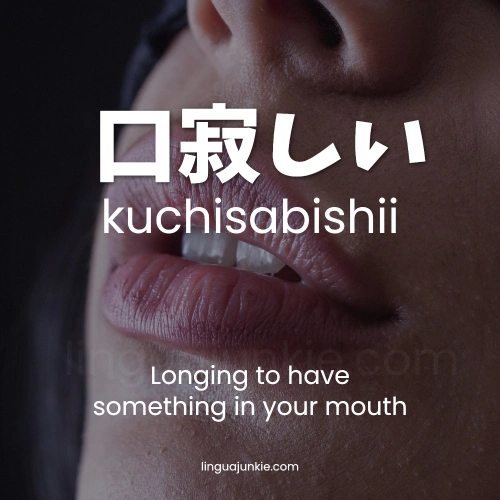
40. Kuchisabishii
- Meaning: Longing to have something in your mouth / lonely mouth
Literally, this means “lonely mouth.” And this is in regards to food. So, this is when you eat when you’re not hungry but because you have nothing better to do.
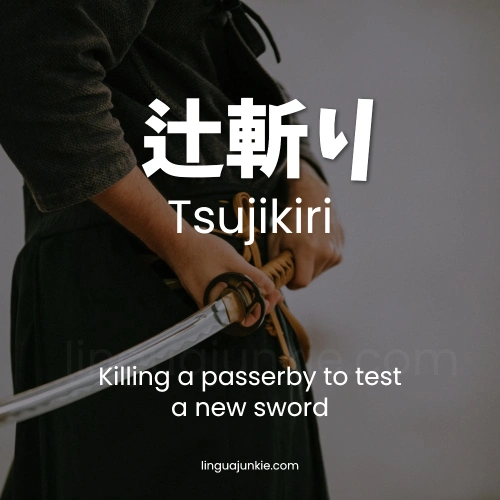
41. Tsujikiri
- Meaning: Killing a passerby to test a new sword
If you’re thinking that this has to be a samurai sword word, you’re right. When one buys a new car, they take it for a drive. Bed? They take it for a nap. And a sword? Well, you do what swords are designed to do. If you were a samurai back in the day, where else would you find another person? While passing them by on the street!
So, tsuji means street or crossroad and the second part, kiri, is to slice or kill.
Definitely one of the more “fun” beautiful Japanese words here.
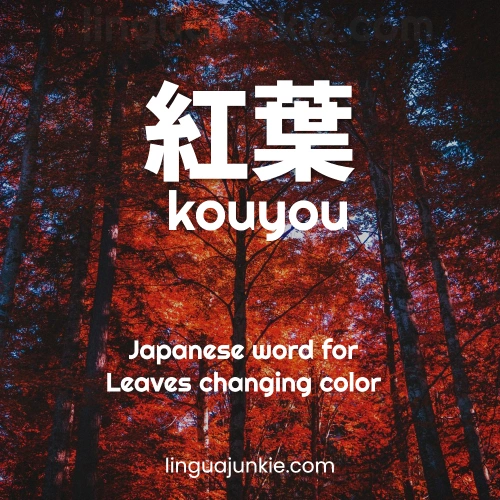
42. Kouyou
- Meaning: Leaves changing color
The first character means “crimson” or “red” and the second one means “leaves.”
But, in general, this term is known as the changing of colors of leaves in Autumn. In Japan, this is a pretty big deal as well, akin to admiring the cherry blossoms in the Spring.
You can also find this on my list of Japanese autumn words.
43. Itadakimasu
- Meaning: I humbly receive (food)
I mean, who doesn’t want to receive food?
The Japanese say “itadakimasu” before they eat. This is what’s known as a Japanese set phrase — a phrase used with certain occasions… like eating! But, as with all beautiful Japanese words, this one has more nuance to it. It also includes thanks and gratefulness to everyone who was responsible in making the food. Farmers growing the veggies. Those that have delivered it to the city. And your cook as well.
This word also goes back to the Buddhist concept of being respectful to all things.
You’ll normally see this translated as “bon appetit” but translations won’t get the meaning and feeling right.
Here’s another one of my favorite beautiful Japanese words.
44. Ojamashimasu
- Meaning: I will disturb you in your home
Jama means disturbance. Shimasu means to do. It just means “I will bother you.” However, you use this when you enter someone’s home. It’s a sign of respect for the person you are visiting and their home.
45. Otsukaresama desu
- Meaning: “it’s been tough and you must be tired”
This is another Japanese set phrase… and carries many meanings depending on context.
Otsukare is often used at the end of the day to others, like coworkers, team players or students where both of you literally worked hard.
It’s a parting greeting but is also used to acknowledge that “you have worked hard.”
46. Mottainai
- Meaning: What a waste
While this first and foremost is used to express regret over waste – like food, there are other uses too. You can use it to say that there’s too much of something, and thus it’s a waste. Or, you can use it to say you are “mottainai” in the event that someone is too good for you.
Actually, this is a common way to say “it’s not you, ‘it’s me” as a way to reject someone in Japanese.
47. Nekojita
- Meaning: Having a cat’s tongue & a dislike for hot food & drink
The real meaning of this word is just a “dislike for super hot foods and drinks.” But, for some reason, it’s made of 2 characters. The first one means cat. The second is tongue. While we have no proof that cats hate hot/warm food, that’s the way the phrase goes. So, if you can’t handle that, you’re said to have a cat’s tongue.
By the way, hot meaning in temperature and not spiciness.

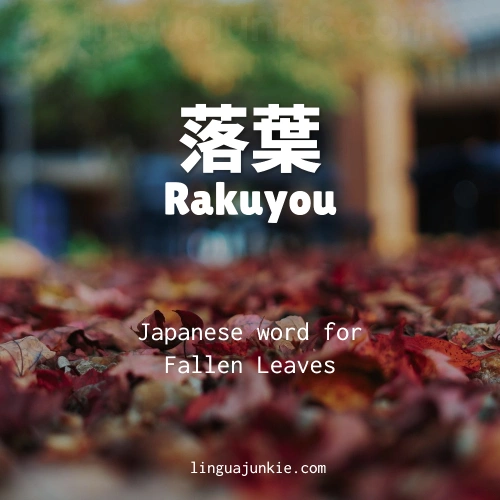
48. Rakuyou
- Meaning: Fallen Leaves
This is another fall-themed word. Why is it on my list of beautiful Japanese words? Well, in English, it takes 2 words to express it. In Japanese, it’s just one. And because it’s one, it carries a stronger image of autumn, fallen leaves and the atmosphere.
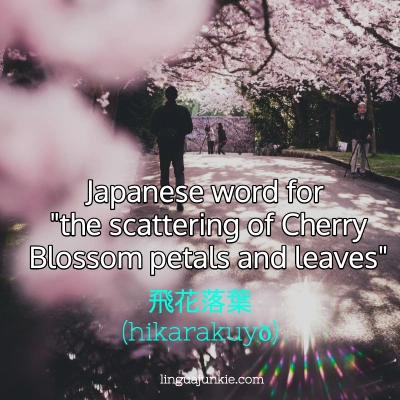
49. Hikara rakuyou
- Meaning: Scattering of Blossoms
You know “rakuyou…”
Well, this version refers to the scattering of cherry blossoms. It is also a “yojijukugo,” a Japanese saying made up of 4 Kanji — 飛花落葉.
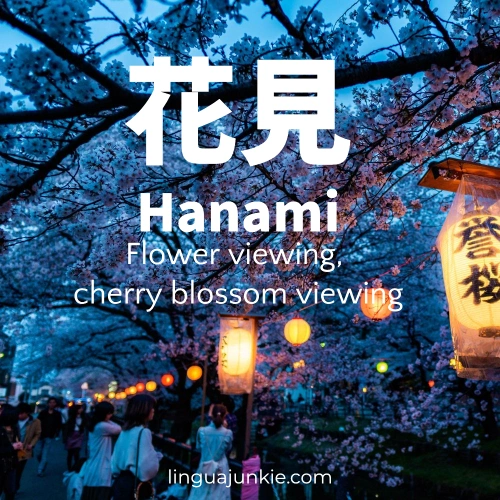
50. Hanami
- Meaning: Cherry Blossom Viewing
Hanami is literally translated as “flower viewing.” But, it is mostly used for going to see the Cherry Blossoms (also known as Sakura). This is a Japanese tradition where many Japanese head out to see the Sakura in their full bloom.
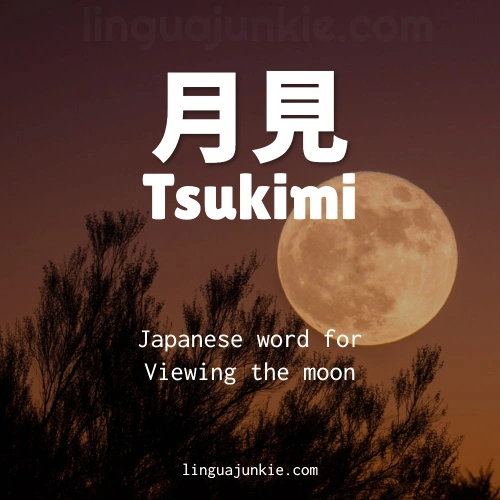
51. Tsukimi
- Meaning: Viewing the moon
Just like there’s a “cherry blossom viewing,” there’s also a moon viewing.
When does this happen? Usually in September or October when there’s a full moon.
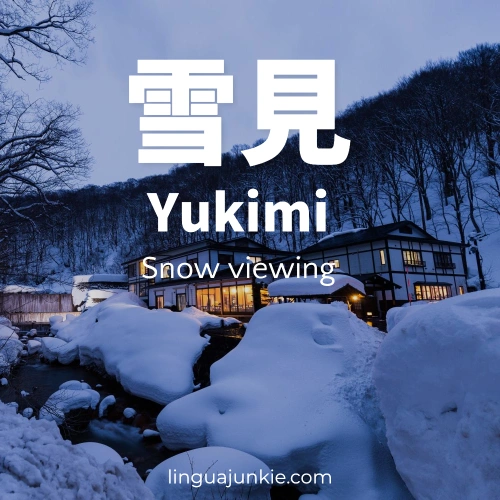
52. Yukimi
- Meaning: Snow viewing
You heard of cherry blossom viewing. You heard of moon viewing.
Well, then there is “Yukimi” which means snow viewing… and watching the snow come down. For the Japanese, this is preferably done while in a warm onsen bath/hot spring resort with a view.
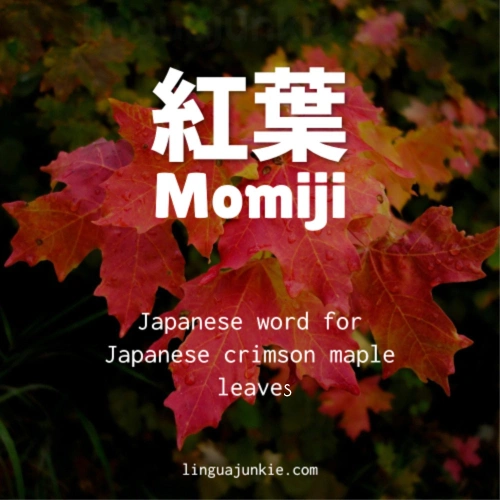
53. Momiji
- Meaning: Japanese crimson maple leaves
Pick apart the characters and this just means “crimson” and “leaves.”
However, say this word out loud. Momiji. It’s nice sounding word and hence made it on the list!
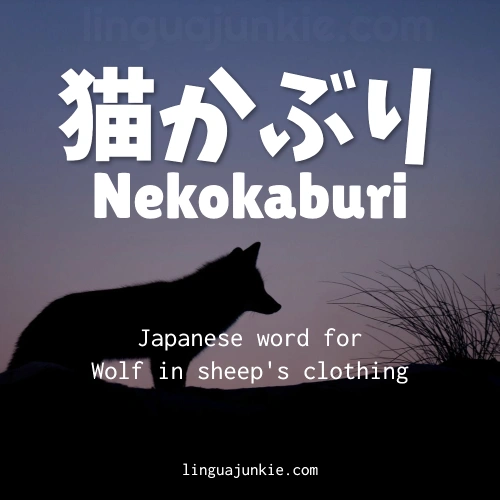
54. Nekokaburi
- Meaning: feigned innocence or naïveté
This means “feigned innocence or naïveté.”
In other words, the person is pretending to be dumb and innocent, like a wolf in sheep’s clothing.
However, the Japanese word here is totally different. If you pick apart the words, it means “to put on a cat.”
Neko is how you say cat in Japanese. Why cat? Well, know how cats decide to whack items off tables and look at you like they’ve done nothing wrong?
That’s where it comes from.
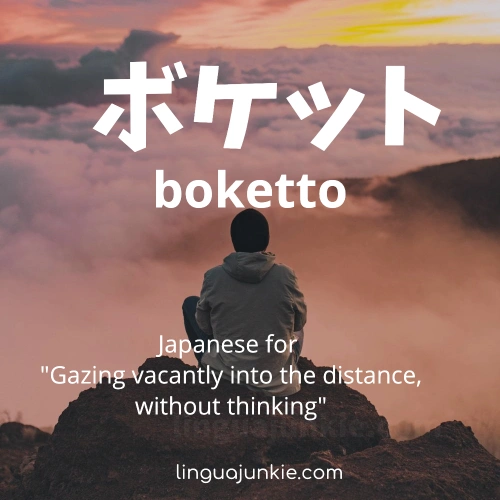
55. Boketto
- Meaning: Gazing vacantly into the distance, without thinking.
This word comes from ぼけとする/boketosuru – to daydream. Boke, interestingly enough, also means fool.
But, don’t let that tarnish this word. It’s nice not to think sometimes. Some things are not worth thinking too much about!
56. Rounin
- Meaning: A Wandering Samurai Without a Master
The first part, rō (浪) means “wave” or also “unrestrained”, while nin (人) means person.
Back in the day, according to their warrior code, samurai served a master and it was dishonorable to go on without one. They would have to commit suicide (seppuku). So, wandering around without a master went against the code and was considered dishonorable.
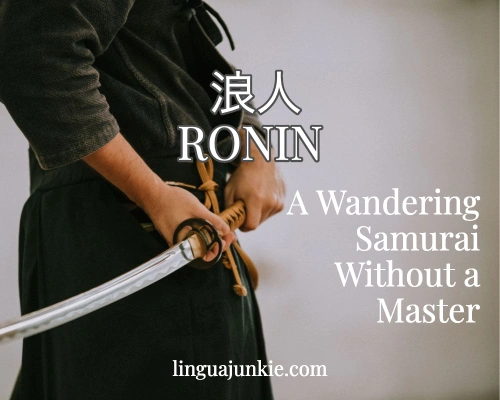
Of course, you can debate whether this is a beautiful word or not, but it certainly carries a lot of meaning that requires explanation, and is not easily translatable.
57. Shiokaze
- Meaning: Salty Sea Breeze
If you’ve ever smelled the salty ocean water in the air, then this is the word for you: 潮風 (shiokaze).
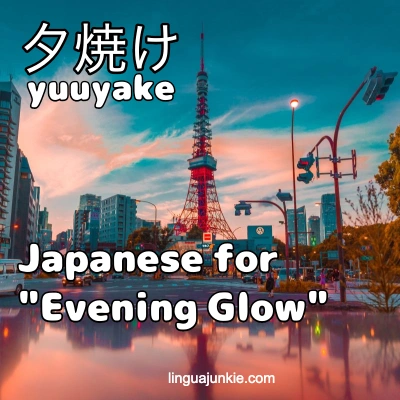
58. Yuuyake
- Meaning: Evening glow
Ever notice that orange tint that kicks in as the sun sets in the evening?
Whether on buildings, trees, or just the overall look of your surroundings? Well, that’s the good old evening glow that makes everything look and feel warm and serene. And the Japanese word for it is “yuuyake.”
59. Eien
- Meaning: Eternity
This one in particular is 1) pleasant to the ear and 2) just a cool word in general — eternity. Say it with me, “ei-en.”
60. Hanabi
- Meaning: Fireworks (lit. fire flower)
What makes this a beautiful word is the combination of Kanji: 花 flower and 火 fire.
And if you look at fireworks… well, they do look like flowers. Wonderful imagery.

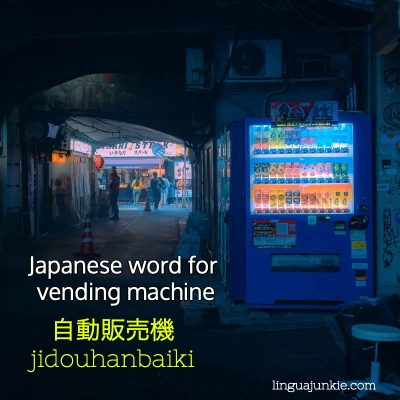
61. Jidouhanbaiki
- Meaning: Vending Machine
Alright, how did a vending machine make this list of beautiful Japanese words?
Well, mind you I am biased. But bear with me and see how this word is said:
- Pronunciation: jidou hanbai ki
Honestly, I struggled with the pronunciation when I first learned it, but it’s a wonderful mix of sounds… and also a great place to buy drinks. And to be honest, vending machines do have a unique vibe and look with their blue glow at night. I’d say, there IS beauty in there.
62. Oubaitori
So, this one requires some explanation…
- Meaning: everyone is different (lit. sakura, ume, peach, plum blossoms)
- 桜梅桃李
Oubaitori is comprised of 4 Kanji, each standing for certain kinds of flowers – the cherry blossom/sakura, the ume, the peach, and the plum blossom. These 4 kinds of blossoms grow around the same time, in close proximity, but they are vastly different from each other.
And so, the oubaitori concept can be understood as “everyone is different.” Just like these flowers grow in their own ways, humans have their own paths.
63. Datsuzoku
- Meaning: Break from the norm
脱 (datsu) means “to escape,” “to remove,” or “to take off.” Then, 俗 (zoku) means “custom,” “worldly,” or “common.”
All in all, it means to pursue individuality and live life as you are, without being bound by rules and tradition.
64. Yarazunoame
- Meaning: rain that prevents a guest from leaving
A well-timed rain that stops someone from going.
This beautiful Japanese word also a feeling of not wanting to let important people leave. Whether it’s a family member, someone you love, or heck… a customer at a store.
There’s almost a whole movie scene inside this one word. Two people. One is madly in love with the other. And just as one is about to go… it rains.
Talk about beautiful Japanese words… this next one is a good one if you like Japanese autumn words.
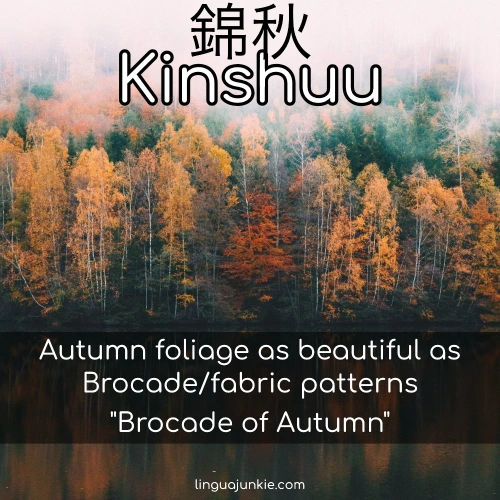
65. Kinshuu
- Meaning: Autumn foliage as beautiful as fabric patterns
The first kanji is 錦 (kin) meaning brocade. The other is the kanji for autumn, 秋.
And brocade is a word for rich, colorful fabric.
So, “Kinshuu” quite literally compares fall colors to that of beautiful fabric. So, when you look out at all the trees of all different colors, it’s as if it’s indeed all a fabric of green, red, and yellow patterns.
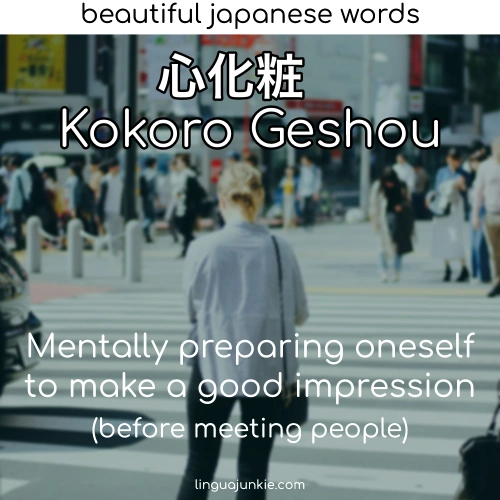
66. Kokoro Geshou
- Meaning: Preparing oneself to make a good impression
Kokoro means heart, and also mind and spirit.
Geshou/keshou means makeup.
So, just as makeup is used to cover one’s true face…
This phrase refers to “putting on your best face” or “mentally preparing yourself” before seeing others so that you can show your best self. You know, kind of like people do on first dates… or when meeting new people for the first time.
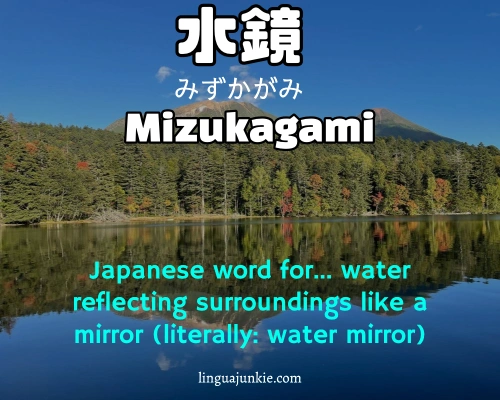
67. Mizukagami
- Meaning: Water reflecting surroundings like a mirror
This aesthetic Japanese word literally means water mirror — (mizu) + (kagami)
If you’ve ever come across a water surface so still and clean…
Where you can see a perfect reflection of the surroundings, you’ve found yourself a “mizukagami.” Back when mirrors weren’t around, people would fill objects with water (or make puddles) in order to see their reflection
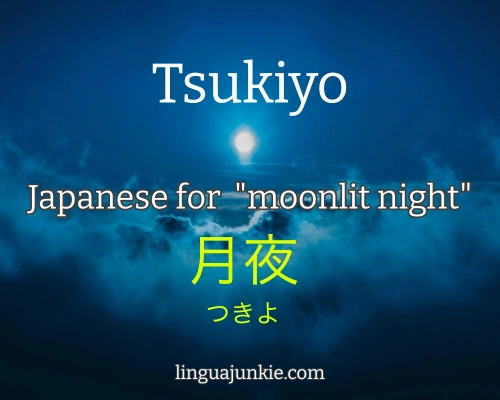
68. Tsukiyo
- Meaning: Moonlit Night
With tsukiyo, one imagines a night bathed in soft moonlight — often associated with tranquility, nature, and beauty.
Tsuki is how you say moon in Japanese.
And the yo means night. (Kanji 夜 is for night.)
69. Hanafubuki
- Meaning; Cherry Blossom Blizzard
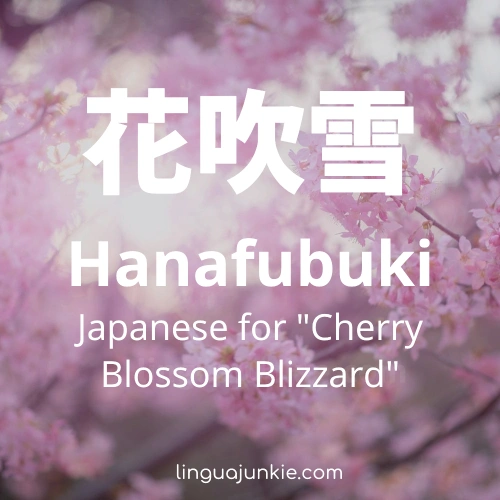
Imagine cherry blossom petals swirling in the wind…
And floating to the ground like snowflakes.
It’s a scene out of anime… and real life as well, if you ever visit Japan during Sakura season.
This word refers to Cherry Blossoms (Sakura) and how their petals come floating down, slowly, en-mass, as if a snow storm or blizzard.
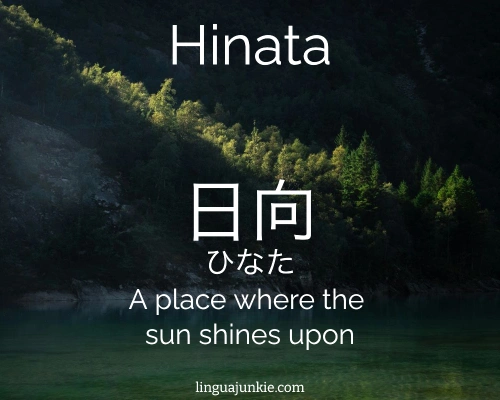
70. Hinata
- Meaning: A place where the sun shines upon
Hinata (日向) is one of those beautiful Japanese words that refers to an area where the Sun is shining onto. You might also know it as a female name, especially in anime.
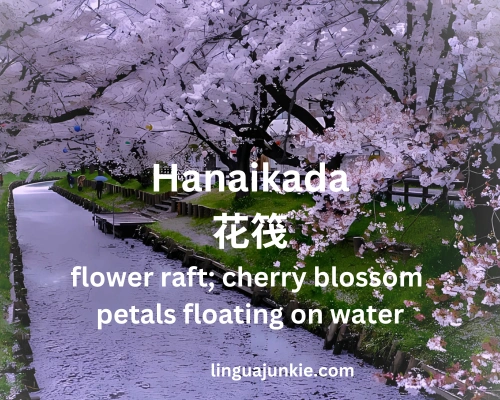
71. Hanaikada
Meaning: Flower raft; cherry blossom petals floating on water
This is a sight you’ll only see in Japan.
Groups of flower petals floating down rivers or lakes after a good “hanafubuki.” (You learned this word above.) Like a raft made of flowers.
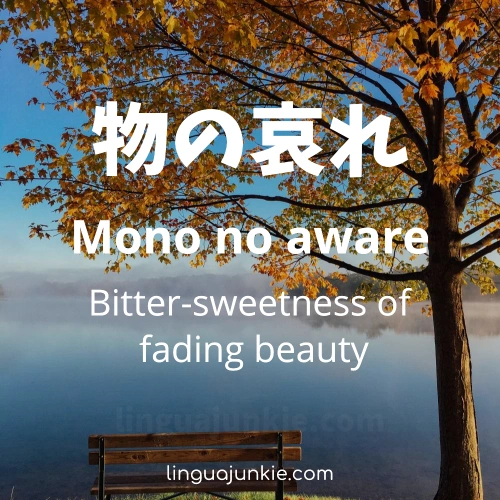
72. Mono no Aware
- Meaning: Bitter-sweetness of fading beauty
This refers to the “bittersweetness of fading beauty” – the acknowledged but appreciated, sad transience of things.
Kind of like the last day of summer or the cherry blossoms – which don’t last long.
73. Naru you ni naru
- Meaning: Whatever happens happens
Literally, this Japanese phrase means… “as it will be, it will be.”
The verb “naru” means to become/be and “you ni,” when coupled with a verb in dictionary form, means “as (verb).”
As in, “as you can see” or “as they do it.”
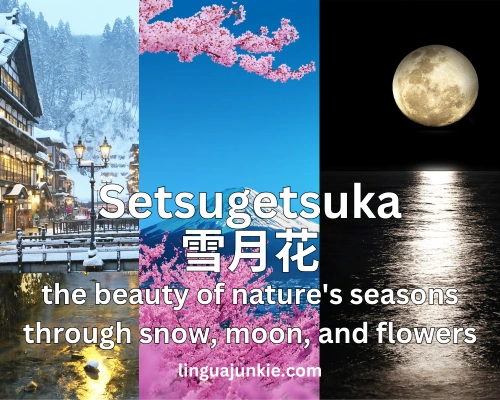
74. Setsugetsuka
- Meaning: literally snow, moon, and flowers
- the beauty of nature’s seasons through snow, moon, and flowers
“Setsugetsuka” (雪月花) is a beautiful and culturally significant Japanese expression that literally translates to “snow, moon, and flowers.” These three elements together represent the changing seasons and the transient beauty of nature in Japanese aesthetics.
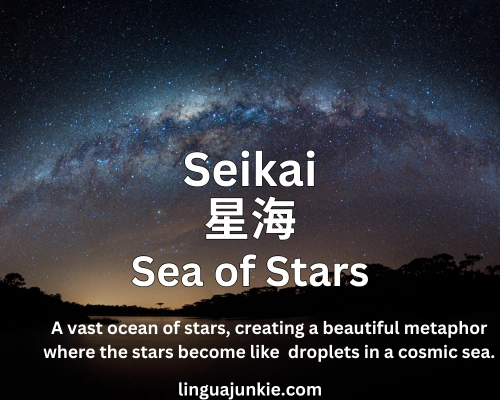
75. Seikai
- Meaning: Sea of stars
“Seikai” (星海) translates to “sea of stars” in Japanese. It combines “sei” (star) and “kai” (sea). This poetic term describes the night sky as a vast ocean of stars, creating a beautiful metaphor where the stars become like droplets in a cosmic sea.
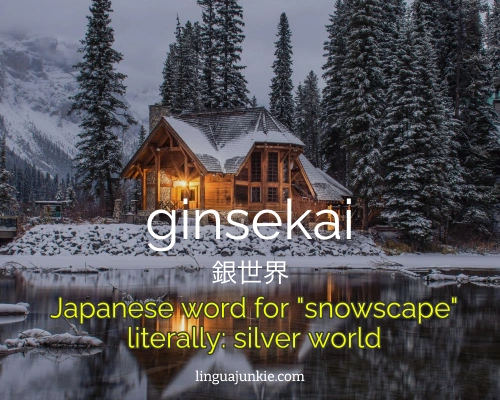
76. Ginsekai
- Meaning: snowscape
- Literally: silver world
“Ginsekai” (銀世界) is a Japanese compound word that combines:
- Gin (銀) – “silver”
- Sekai (世界) – “world” or “universe”
“Ginsekai” is used to describe a snow-covered landscape. It’s a poetic term that evokes the image of a world transformed by snow, where everything is covered in a glistening silver-white blanket.
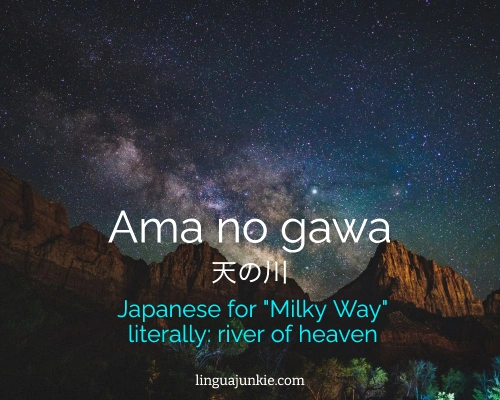
77. Ama no gawa
- Meaning: Milky way
“Ama no Gawa” (天の川) is a Japanese term that literally translates to “River of Heaven.”
This is the Japanese name for what we call the Milky Way galaxy in English.
78. Mushin
- Meaning: No Mind
Mushin (無心) is a concept in Japanese philosophy and martial arts and literally translates to “no mind.” Breaking down the characters, “mu” (無) means “nothingness” or “without,” and “shin” (心) means “heart,” “mind,” or “spirit.”
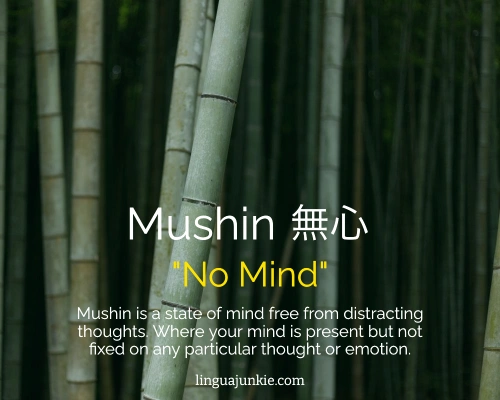
Mushin is a state of mind free from distracting thoughts. Where your mind is present but not fixed on any particular thought or emotion. It’s often described as a state of “flow.”
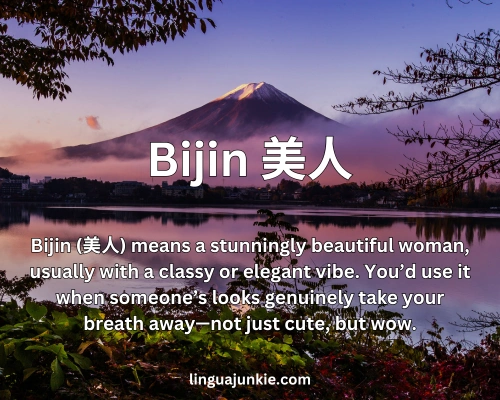
79. Bijin
- Meaning: Beauty / Beautiful woman
Ever see someone you’re immediately floored by? You’d call them a bijin — a term used for a beautiful woman. Not pretty. Not cute. Not sexy. But, astonishingly beautiful. And of course, a list of beautiful Japanese words would not be complete without a word like this.
80. Shimoyo
- Meaning: Frosty Night (霜夜)
Shimo 霜 means frost and the yo is night. Frosty night as in… a clear, cold night where frost forms on windows.
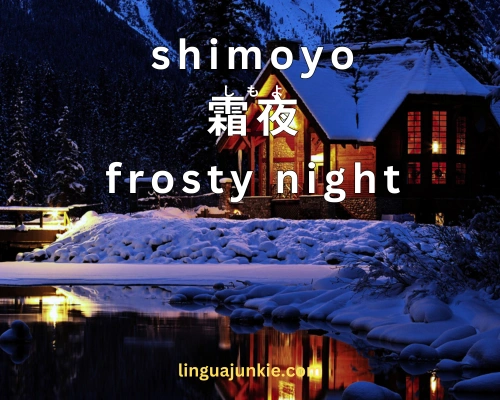
This is a poetic word that Japanese writers would use to set a mood of solitude.
81. Nagisa
- Meaning: “water’s edge” or “shoreline” (渚)
Nagisa is where waves gently meet the land… like a beach or lakeside.
It’s a poetic word often used in songs, literature, and place names.
Unlike the more common word 海岸 (kaigan) for “coast” or 浜辺 (hamabe) for “beach,” nagisa has a softer, more emotional feel. It’s a quiet, calm stretch of sand where the water laps gently. It’s also a female Japanese name!
82. Kodama
- Meaning: “tree spirit” or “echo in the woods.” (木霊)
Literally, this word means tree spirit or echo in the woods…
Traditionally, it refers to spirits believed to live in old trees deep in the forest. Just think of the great deku tree in the Zelda games.
Over time, kodama also came to mean the echo in the forest… the ech you get when you call out if in the woods and hear one back. As if the forest is alive and talking back to you.
Fun fact: Kodama is also a type of Shinkansen (Japanese bullet train.) They get some cool names.
83. Kokoro no Yoridokoro
- Meaning: A place your heart can rest. (心の拠り所)
Kokoro means heart and yoridokoro is a place to rely on or a source of support. That yoridokoro is a combination of tokoro (place) and the verb yoru (to depend on.)
It’s a poetic way of saying, “my emotional safe space” or “source of peace.” Or, a place your heart can rest. It can be a person, place, thing, noun, belief, hobby, memory, or ritual. Whatever brings you peace.
84. Seijaku
- Meaning: A deep, peaceful quiet or calm silence. (静寂)
Seijaku combines 静 (sei), meaning quiet or calm, and 寂 (jaku), meaning loneliness, stillness, or solitude.
Together, it’s like a spiritual kind of silence. The kind of quiet that feels sacred. Like at a temple with nobody around at dusk. You can experience seijaku before sunrise or in a forest where all you hear is the wind and the rustling of the leaves.
85. Namida Ame
- Meaning: A gentle rain said to fall when someone is sad or leaving. (涙雨)
This literally means “tear rain” as the first kanji 涙 is for tears and the second 雨 is for rain.
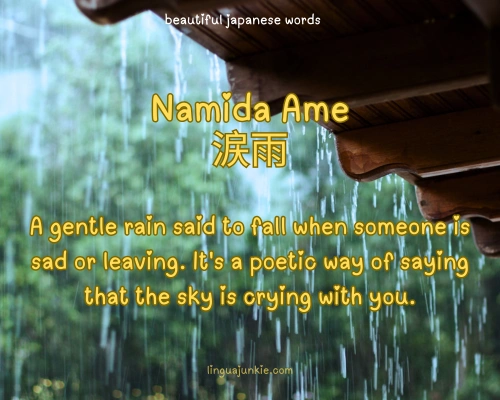
Namida ame refers to the rain that seems to mirror human emotion. Particularly if it falls on a sad day. It’s a poetic way of saying that the sky is crying with you.
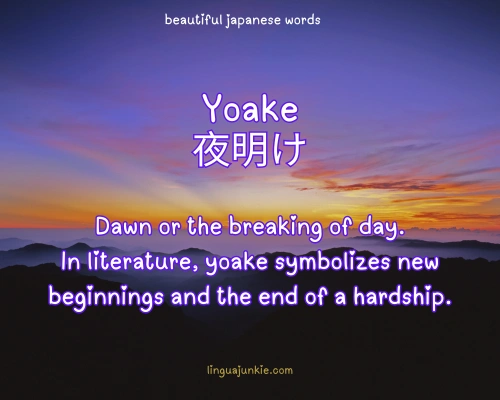
86. Yoake
- Meaning: Dawn, the breaking of day. (夜明け)
Given the kanji in this word…
It literally means “opening of the night.”
In daily use, you just use it to refer to dawn. In literature, it symbolizes new beginnings and the end of a hardship. That even the longest, darkest night eventually ends.
87. Hana arashi
- Meaning: Flower storm, swirling cherry blossom petals in the wind. (花嵐)
This word is a literal combination of flower and storm.
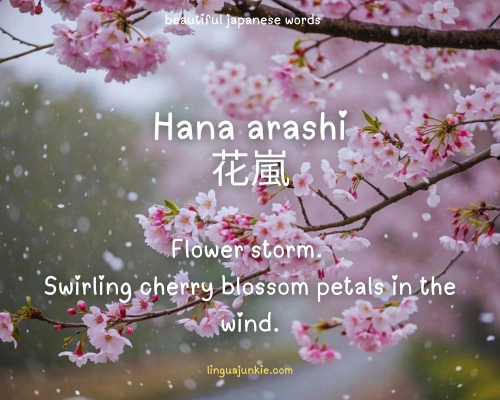
Hana arashi refers to the brief, swirling gusts of wind that send cherry blossom petals swirling through the air. Have you ever seen a flower storm? Leave a comment.
88. Betsu bara
- Meaning: Literally, separate stomach.
This is a playful Japanese expression that essentially means, “there’s always room for dessert.”
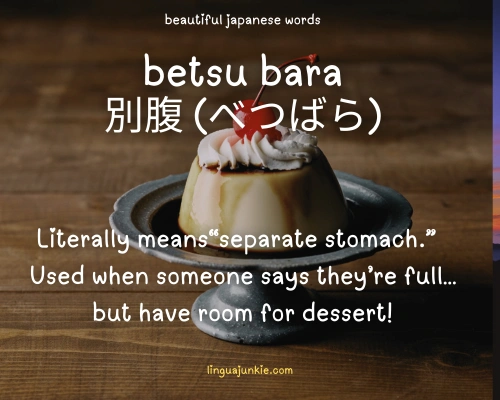
People use it when they’re full… but suddenly have a separate stomach for dessert.
Do you have room for dessert?
89. Ishin denshin
- Meaning: Understanding each other without words (以心伝心)
Literally, this word means “heart to heart communication.”
- 以 (i) – by means of
- 心 (shin) – heart or mind
- 伝 (den) – to transmit
- 心 (shin) – heart or mind
You’d use it when you and someone just get each other without having to say anything. Or when you and someone are thinking the same exact thing. In Japanese culture, subtlety, indirectness, and consideration of people around you are important… which gives rise to this ishin denshin.
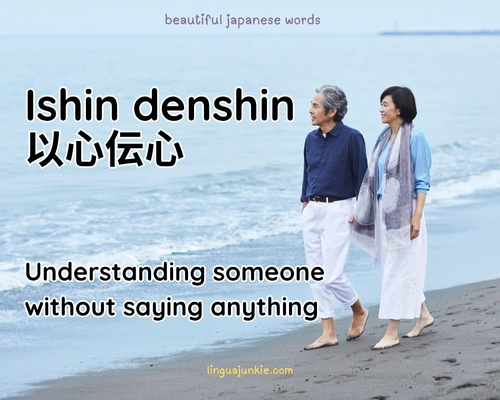
Close friends, family, and long-time coworkers, could be said to have it. And if your sport’s your bag, team mates on the court who have an intuition for where the others are and what they’ll do… can also be said to have it.
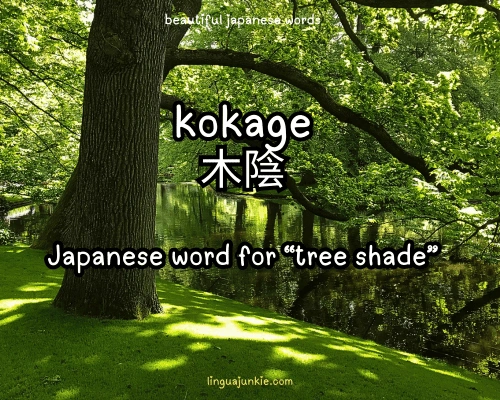
90. Kokage
- Meaning: tree shadow (木陰)
If you enjoy words like komorebi, this is another beautiful Japanese nature word.
木陰 (kokage) is made up 木 meaning “tree,” and 陰 meaning “shade” or “shadow.”
Together, they form the image of the soft, protective shade beneath a tree.
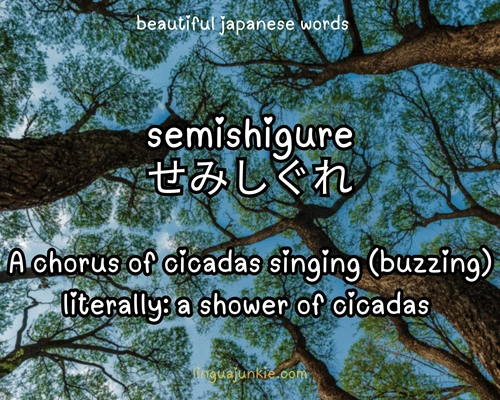
91. Semi shigure
- Meaning: A “shower” of cicadas (蝉時雨)
Semi shigure is a the loud, continuous buzzing of cicadas that you’ll hear in the summer.
The word “shigure” means “a light rain shower.” In this case, this beautiful Japanese word compares that cicada buzzing to the sound of a rain shower coming down.
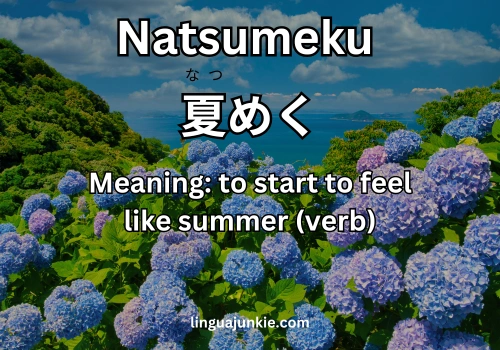
92. Natsumeku
- Meaning: to start to feel like summer, to become summery (夏めく)
Ever feel like, “ah, it’s starting to feel like summer?”
Whether if it’s the air getting warmer, people dressing in shorts and tank tops, or more barbecues…
Yep, that’s where this word comes in. Natsumeku is a verb that essentially means “it’s starting to feel like summer.” It’s a combo of the word “natsu” and “meku” which is a verb suffix that adds the meaning “to become like” or “to show signs of,”
You’ll also find this on my list of Japanese summer words.
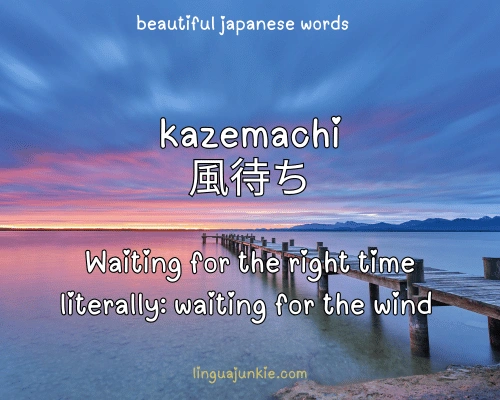
93. Kaze machi
- Meaning: Waiting for the right time (風待ち)
Literally, this phrase means “waiting for the wind.”
“Kaze” is wind and “machi” comes from the verb “matsu” – to wait. This word comes from the sailing days where sailors would rely and “wait” on winds before their boats could move. From that came the idea of “waiting for the right moment.” So you’d use this word when you’re waiting for the right time to take action.
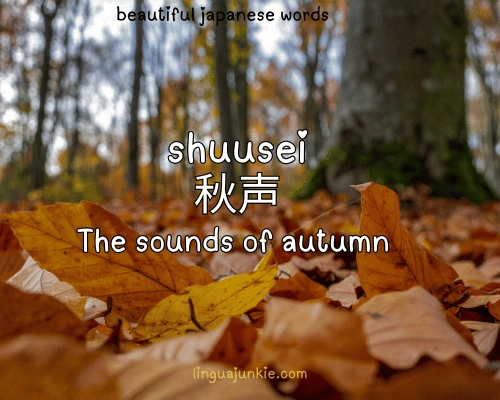
94. Shuusei
- Meaning: Sounds of autumn (秋声)
This Japanese word refers to the sounds of autumn… such wind, dry leaves rustling (or crunching), crickets chirping, and the like.
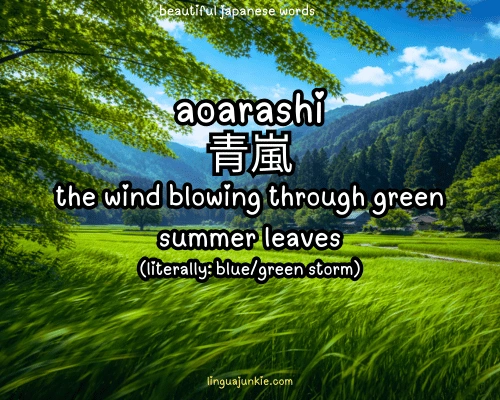
95. Aoarashi
- Meaning: the wind blowing through green summer leaves (青嵐)
Literally, this word means “blue/green” storm. As you know, ao is the Japanese color word for blue (but Japanese also has this whole thing of blue and green being the same – more info here).
- 青 means “green/blue” (fresh greenery)
- 嵐 means “storm”
What it refers to is the strong, fresh wind that blows through lush green fields and trees in early summer… and causes a “storm of green.” This word is less so about violent weather and more so about describing fresh greenery swaying in the wind.
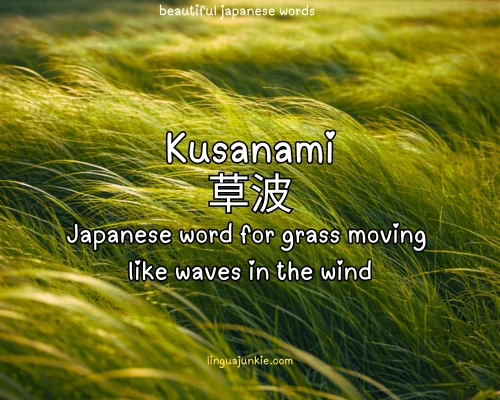
96. Kusanami
- Meaning: Grass moving like waves in wind (草波)
Kusanami describes grass or reeds moving together in the wind… like waves on the sea. The word is a combination of grass (草) and wave (波).
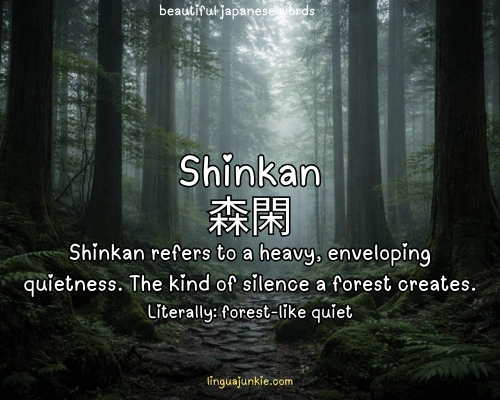
97. Shinkan
- Meaning: A heavy, enveloping quietness (森閑)
Shinkan refers to a heavy, enveloping quietness. The kind you’d most often find in a forest, a temple, or any place where all sound disappears. Literally, it means “forest-like quiet” or “a quiet as deep as a forest.”
- 森 – forest, woods
- 閑 – quiet, leisure, tranquility
However, trees aren’t the point even though 森 (“forest”) is in the word. The 森 kanji is doing more atmospheric work than literal work. It conveys a natural, enclosed, sound-absorbing quiet. It can be a forest… but more accurately, it’s the kind of silence a forest creates, not the trees themselves.
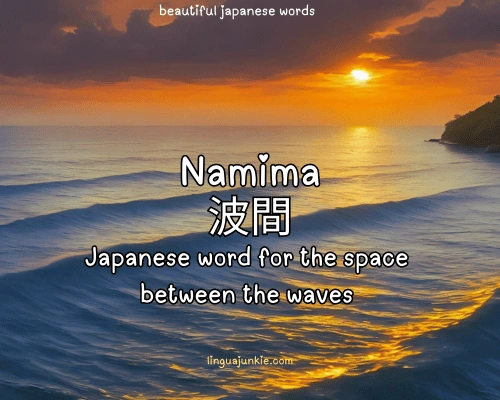
98. Namima
- Meaning: between the waves (波間)
Namima refers to the space between waves. The brief, calm space where the water is smooth before the next swell. If you look at the space between waves, you’ll immediately see it.
- 波 (nami) – wave
- 間 (ma/aida) – interval, space, between
This word is often used poetically for pauses, breathing room, or quiet moments in the midst of movement or change.
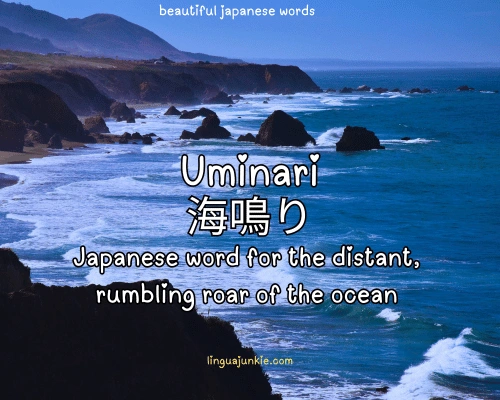
99. Uminari
- Meaning: the distant, rumbling roar of the ocean (海鳴り)
Literally, uminari means the “sea sound/roar.”
- 海 – sea, ocean
- 鳴り- sound, roar, ring
This word describes the deep rumbling of the ocean that you can hear from a distance. And there’s something powerful about it, isn’t it? The ocean announcing its presence and power even before you can see it.
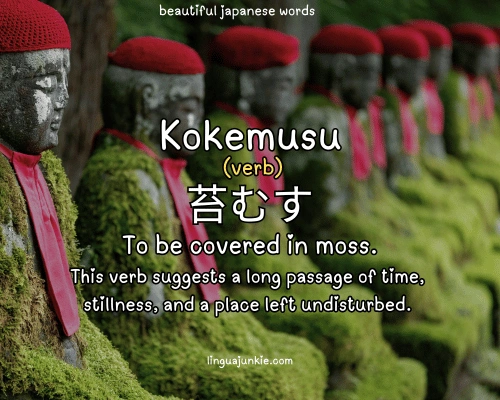
100. Kokemusu
- Meaning: To become covered in moss (苔むす)
If you saw my post on Japanese nature words, you’d know that koke means moss.
So, kokemusu (verb) means to become covered in moss. Something you’d see on stones, trees, or old buildings. This verb suggests a long passage of time, stillness, and a place left undisturbed. Where time and nature take over.
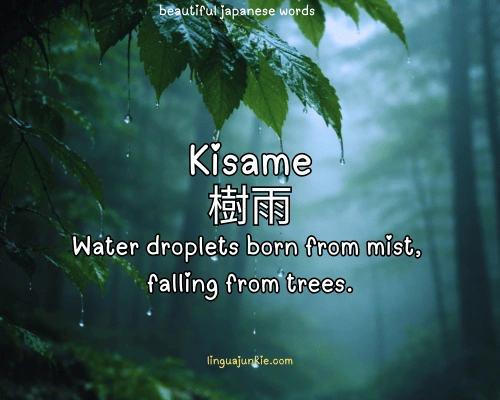
101. Kisame
- Meaning: Water drops from fog on the leaves in a forest (樹雨)
Kisame refers to the water drops that result on trees from fog and mist… and then roll off and fall. It’s not rainfall, but moisture created within the forest itself, giving the sense that the trees are producing rain.
102. Youen
- Meaning: eerily captivating beauty (妖艶)
Youen is a poetic Japanese word for beauty that’s mysterious and almost magical… Like you can’t look away even though something about it feels a little eerie. It’s mostly used in writing. You’ll see it in manga captions, anime subtitles, novels, poetry, or character profiles. You will not hear this in everyday conversation. For example, youen could be used to describe a vampire character who’s gorgeous but dangerous or a fox spirit who lures people into the forest.
Basically any time beauty comes with a hint of “wait… something’s not quite right.”
Oh… You Made It.
Do people read this last part?
Leave me a comment if you did… because 99% of people don’t.
Anyway, now you know some beautiful Japanese words with deep meanings.
Yes, you’re right – there are TONS more and I update this list as I come across new words.
So… here’s my question to you:
Do you have any favorite beautiful Japanese words? Any phrases that I missed or that you want me to add to the list?
Let me know in the comments and I’ll add them.
– written by the Main Junkie

woow, amazing n long list!
test
[…] beautiful Japanese words […]
[…] You’ll find Hanabi on my list of beautiful Japanese words. […]
[…] Beautiful Japanese Words […]
Thank you for sharing this. It is much appreciated. A lot of effort behind this collection of words, perhaps easy to take for granted.
PS: Something is off with the scrolling flow on this website compared to other sites (normal scroll flow). Perhaps look into it? have a good day and look forward to more Japanese words:)
[…] But you may know of it as one those unique and beautiful Japanese words. […]
Given how much I love the smell of the ocean, 潮風
has to be my favorite word here.
[…] looking at things. And as such, when you’ll learn another language, you’ll come across beautiful Japanese words and phrases that are… unique. Untranslatable. Where the literal meaning doesn’t match […]
Hi I really liked wabi Sabi, I was wondering if there was any Japanese quote encompassing it? Or a translation perfectly imperfect, was wanting to get something of this nature as a tattoo. Thanks!
What is the word for something coming in and out of view from clouds?