
The best way to learn Japanese? Out of necessity.
Especially if you’re sitting at home and freezing because you can’t figure out your Japanese air-conditioner.
It’s time learn Japanese or die, baby. I’ll guide you through…
the Japanese Air Conditioner.
It’s worse than Japanese toilets, and Japanese toilets are pretty DAMN awesome. Okay, perhaps I’m making a bad comparison here.
But anyways, you should call it an aircon, spelled エアコン in Katakana.
It has all these buttons on there and all you’re hoping for is “HOT,” “COLD” and “INTENSITY,” right?
Too bad. They decided to latch on more features.
So, let’s translate the Japanese aircon remote kanji and learn some Japanese in the process. I’ll show you 2 examples of remotes below.
✅..And hey, if you want to learn & speak Japanese with a complete learning system, (2,000+ audio/video courses, apps, study tools and more) Sign up at JapanesePod101 (click here) and start learning! I recommend ’em as a teacher & learner.
By the way, the remote control is called リモコン (rimokon).
Aircon Remote #1
So, here’s a spiffy looking picture of my old Daikin remote control.
See if it matches yours. If it doesn’t, don’t worry, all the words should be the same. If you’re still worried, check out my other remote control below.
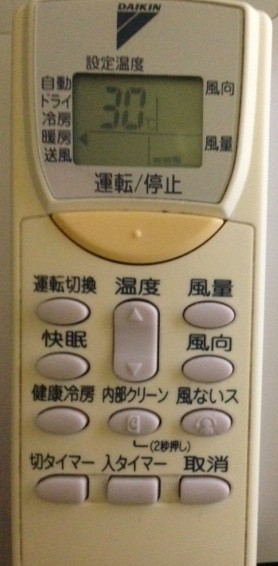
So, the top says 設定温度 (せっていおんど) meaning “setup temperature” or your set temperature.
I was stayin’ nice and hot with 30 degrees Celsius.
Of course, this リモコン is loaded with all kinds of functions. Oh, functions! You’ll need to know that in Japanese.
Function: きのう or 機能.
Now, on the left side of the screen, you have the following:
- 自動 : (jidou) Automatic mode. I have no idea how or why and what is automatic.
- ドライ : (dorai) Meaning dry. It’s a cool breeze. I have no idea why it’s dry though.
- 冷房 : (reibou) Meaning “cooling” or “Air conditioning.” Use it for cold air.
- 暖房 : (danbou) Meaning “heating.” Use this to warm your room up.
- 送風 : (soufuu) Just the fan.
To the right of the screen, you have:
- 風向 : (ふうこう) meaning “wind direction” or where your AC is blowing.
- 風量 : (ふうりょう) meaning “wind speed” or how much air you’re blasting right now.
Now below the screen, above the big yellow button.
- 運転 : (うんてん) meaning “operation” but it actually just means “ON.” Turns the AC on.
- 停止 : (ていし) meaning “stoppage” or “halt” but it actually means “OFF.” Turns the AC off.
And all those buttons below.
- 運転切替 (うんてんきりかえ) meaning “change operation.” Use this to switch from hot, cold, dry, fan, etc.
- 温度 (おんど) meaning “temperature.” Press this up or down to raise or lower the temperature.
- 風量 : (ふうりょう) meaning “wind speed” and uses to change the intensity of the air blown out.
- 快眠 : ( かいみん) means “pleasant sleep.” Correct me if I’m wrong but this setting reduces the temperature as you’re sleeping and raises it around the time you get up in order to ensure a pleasant sleep? Just works with the “cooling” setting.
- 風向 : (ふうこう) meaning “wind direction. Press it to adjust the direction of the AC air.
- 健康冷房 : (けんこうれいぼう) means “health cooling” but it’s designed to reduce the degree difference between the temperature outside and inside in case you’re sensitive to it. Yeah, I don’t get it either.
- 内部クリーン : (ないぶくりーん) means “inside clean.” This cleans your aircon from that mildew/moldy smell. You have to hold this button down a bit to make it work.
- 風ないス : (ふりないす)means “nice wind.” Basically, this feature avoids hitting you directly with air. In a cool setting, it aims “up” to envelope the whole room and a hot setting, it aims at the floor. I don’t know either.
- 入タイマー :(いりたいまー)means “timer on” and used to set after how many hours you want the airconditioner to turn on.
- 切タイマー :(きりたいまー)means “timer off” and used to set after how many hours you want the airconditioner to turn off by itself.
- 取消 : (とりけし) means “cancel” and is used to cancel and delete your timer settings.
Damn, I have a REALLY complicated Japanese air con remote. But hold on, there’s some more stuff written on the air con itself.
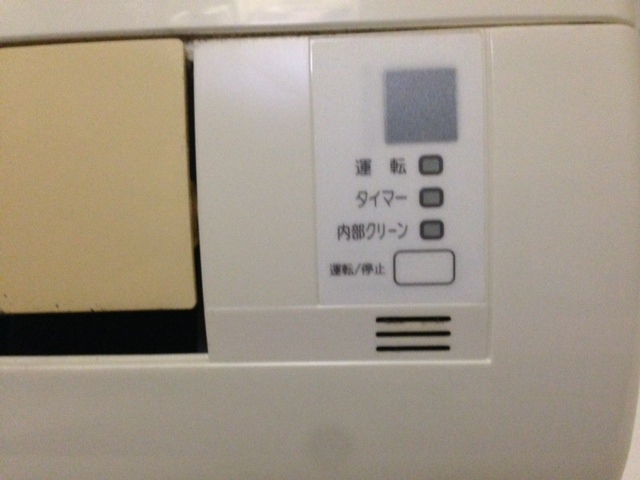
The first three will be lit up if they’re in those modes. The last one, 運転/停止, I’m assuming is the sensor for the remote
- 運転 : “Working” and will have a green light when turned on.
- タイマー: “Timer” and will have a green light when a timer is set.
- 内部クリーン: “Inside cleaning” and will have a green light when it’s in cleaning mode.
- 運転/停止 : The ON/OFF remote control sensor, I think.
And there we go. Of course, I’m still clueless about the 健康冷房 and 快眠 features. If you have a better idea, please leave a comment.
Aircon Remote #2
I’m updating my article with another aircon remote…
Just in case. This one is a Mitsubishi aircon remote. The vocab on the remote itself ain’t too different from the prior.

Let’s look at the vocab.
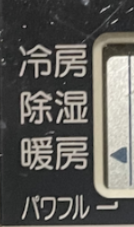
On the left side of the display, we have…
- 冷房 – reibou – cooling
- 除湿 – joshitsu – dehumidification
- This one gets rid of humidity and also feels cold
- 暖房 – danbou heating
- パワフル – pawafuru – powerful – which corresponds with the パワフル button at the lower left corner of the remote. Basically making the output powerful.
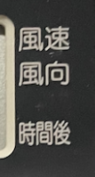
On the right side of the display, we have…
- 風速 – fuusoku – wind speed
- 風向 – fuukou – wind direction
- 時間後 – jikan ato – time after – as in, timer – if you set it to 1 hour, it will turn off after 1 hour
Now, let’s get to the buttons on the Mitsubishi aircon remote.
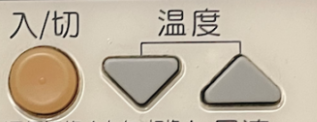
- 入/切 – the on and off button – 入 – represents on, 切 – is off
- 温度 – ondo – temperature
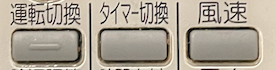
- 運転切換 – unten kirikae – switching between modes like cool, de-humidification and heating
- タイマー切換 – taimaa kirikae – basically timer mode – either X hour to turning off, turning on in X hours, or none
- 風速 – fuusoku – windspeed – where you adjust it
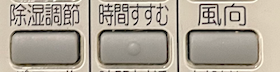
- 除湿調節 – joshitsu chousetsu – if you’re on de-humidification mode, you can adjust this from strong to weak
- 時間すすむ – jikan susumu – time advance – meaning up the time – if you set the timer, this will bump up by 30 minutes every time you press
- 風向 – fuukou – wind direction – press it to adjust where the aircon’s gonna aim at
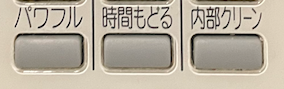
- パワフル – pawafuru – powerful mode – depending on whether you’re set on heating or cooling, this mode will heat/cool the room in a shorter amount of time
- 時間もどる – jikan modoru – bring the the time down. Like the above (時間すすむ) bumps up your time, this one reduces your time by 30 minute increments. If you want to go from 3 hours to 1.5 hours for example.
- 内部クリーン – naibu kuriin – this is “internal cleaning” – basically dries the inside of the aircon after cooling/dehumidification to prevent mold
Back to You
You should now be able to make SOME sense of your Japanese aircon remote.
At the very least, you’ll know how to turn it on and off…
And set it to heating or cooling… and adjust the temperature.
Good enough, I say.
So, I hope this saves you from freezing or overheating in Japan.
It gets HOT in the summer.
Drop a comment below and let me think.
And hey, if yours looks different and you still don’t get it – take a picture and post it in the comments. I’ll translate it (as long as it’s Japanese, haha.)
– The Main Junkie

Thank you!!
THANK YOU!
Do I have an ‘inside clean’ function on my remote? My tatami room always smells moldy/musty.
Thanks for the info, but when I put it on the cooling and I put it for 18°C it blows warm to almost hot air. But when I put it on heating and I put it for 14°C I got really good cold air (or at least I did in the morning, but now I can’t get it back.) What do you think is the issue?
Would you know how much is the electricity consumption of this ARC446A4? Thanks!
Thank you for writing this! I’m on vacation in Kyoto with one of these aircon’s blowing on me all night long. This “nice wind” setting is exactly what I needed to adjust the vent.
Really useful as I have exactly this remote control and was operating it by guesswork! Now I know what I’m doing. ☺
Hi. I have the sanyo portable ac model sa-fw 1661. I cant understand what it says bec. its in japanese. And Its manually operated. Pls. Help. Thanks
Thanks 🙂 Now I know how to use it in this summer. 😛