Look, I need… to teach you how to say need in Japanese.
And you… need… to hear it, so listen up.
Japanese has several ways to say need The common ways are:
- 必要 – hitsuyou – necessary (adjective)
- いる – iru – to need (verb)
- 必要がある – hitsuyou ga aru – there is a need to / is necessary (phrase verb)
And you’ll understand ’em all in just a second. So, you need to keep on reading.

Hitsuyou
必要 (hitsuyou) is an adjective that means “necessary” or “required.”
It’s a neutral, slightly formal word, commonly used in writing, work, rules, and serious statements. You can use it to that things are needed or necessary. Whether by you or just in general.
For example…
- ペンが必要です。
- pen ga hitsuyou desu.
- I need a pen.
- literally: A pen is necessary.
Since it’s an adjective (a “-na” adjective to be specific), you can also stick it in front of nouns. So, you could say something like this…
- 必要なペン
- Hitsyouna pen
- A necessary pen.
You can also use 必要 with verbs to say “Verb is necessary.” Like eating is necessary.
- 勉強するのが必要です。
- benkyou suru no ga hitsuyou desu.
- Studying is necessary.
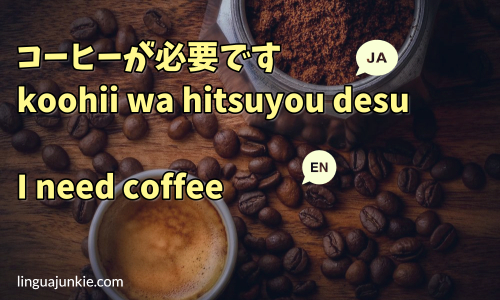
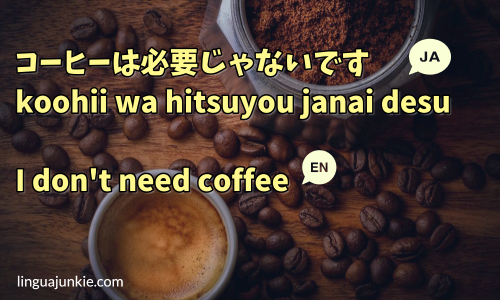
By the way, to make this negative… add a “janai desu” after hitsuyou.
Iru
When speaking casually, Japanese often use いる (iru) to mean “to need.”
Iru is a verb and you’ll use it when you want to say “I need X.”
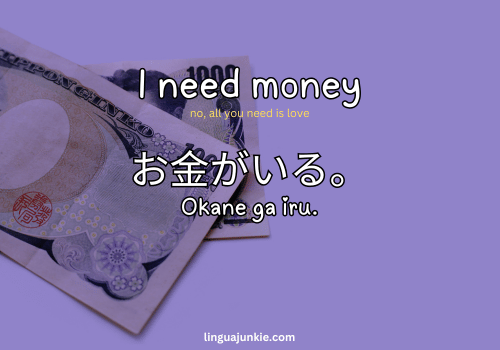
- お金がいる。
- Okane ga iru.
- I need money.
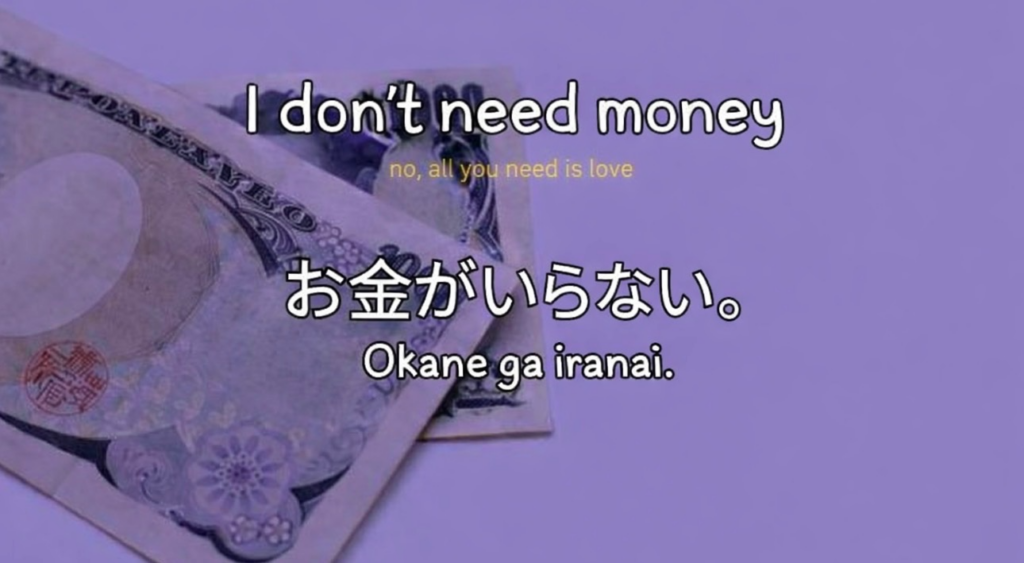
By the way, you can also use it in the negative to say you don’t need something. Just change iru to iranai.
- これはいらない。
- Kore wa iranai.
- I don’t need this.
Or, you can just drop everything but the verb and say…
- いらない
- Iranai
- Don’t need.
These phrases sound natural among friends or family but are VERY casual. So, don’t go tossing them around outside of your circle.
Also, be careful… “iru” also means “to exist” for living things. Context tells you which meaning is intended.
Now, if you want to take “iru” into the polite direction…
The polite form of “iru” is “irimasu” (いります), and this is the version you’ll want to use in most everyday situations, especially with people you don’t know well or when you want to show respect.
“Irimasu” can be heard in shops when cashiers ask if you need a bag or receipt. You’d say “irimasu” for “I need it” or “irimasen” if you don’t.
Iru vs Hitsuyou
Summary: いる expresses a personal need, while 必要 describes a general or logical necessity.
Now… you may have noticed that Iru and Hitsuyou seem familiar.
That you could technically use either format to say something like “I need money.”
- お金がいる。
- Okane ga iru.
- I need money.
- お金が必要です。
- Okane ga hitsuyou desu.
- Money is necessary.
And both are grammatically correct.
So, what’s the difference?
Well, the context.
“Iru” is used casually for talking about personal or immediate needs, especially for physical or concrete things. For example, saying “Okane ga iru” means “I need money,” and sounds natural in everyday conversation. Basically, used for your situation and is commonly used among friends or family.
And hitsuyou?
Well, hitsuyou describes something as being necessary or required, rather than saying what you need. It often appears in formal or neutral contexts, such as instructions, explanations, or workplace communication. Saying お金が必要です means “Money is required,” and it sounds objective and factual rather than emotional or personal.
Think of it like this…
- Iru = “I need it.”
- Hitsuyou = “It is necessary.”
| Expression | Focus | Tone |
| いる (iru) | Personal need | Casual, spoken |
| 必要 (Hitsuyou) | Requirement / necessity | Neutral, formal |

Hitsuyou Ga Aru
“必要がある – Hitsuyou ga aru” literally means “there is a need.”
Basically, you’ll use this when you just want to state when something’s necessary.
Not that you need it… but something is necessary. Like, a pencil is necessary for a test… or an ID is necessary if you want to buy some beer.
This pattern is common in instructions, rules, and explanations.
- パスポートを持ってくる必要があります。
- Pasupo-to wo mottekuru hitsuyou ga arimasu.
- There is a need to bring a passport.
Expressing “Need” Indirectly
Something you should know is…
Japanese people don’t always directly say things. Rather than bluntly saying “I need X,” Japanese speakers often soften their language to sound less demanding. This indirect approach is deeply rooted in Japanese culture and the importance of politeness and consideration for others.
So, one of the most common ways to express need indirectly is through “should” statements, which are gentler.
Here are some patterns:
~たほうがいい (ta hou ga ii) – “It would be better if…”
This pattern is used for giving advice or gentle recommendations. It literally means “the direction of doing X is good,” which softens what might otherwise sound like a command or strong necessity.
- 早く寝たほうがいい。
- Hayaku neta hou ga ii.
- You should go to bed early / It would be better if you went to bed early.
~なければならない (nakereba naranai) – “Must/have to”
While this expresses strong obligation or necessity, it still feels less direct than simply saying “I need.” The structure literally means “if you don’t do it, it won’t do,” which frames the necessity as a logical consequence rather than a personal demand.
- 宿題をしなければならない
- Shukudai wo shinakereba naranai.
- I have to do my homework.
In casual speech, this gets shortened to ~なきゃ (nakya) or ~なくちゃ (nakucha), which you’ll hear all the time in everyday conversation.
- 宿題しなきゃ。
- Shukudai shinakya.
- Gotta do my homework.
Understanding these indirect expressions helps you sound more natural and culturally appropriate in Japanese. While “iru / irimasu” works fine for tangible needs, these softer constructions better capture how Japanese speakers actually navigate obligations and necessities in daily life.
Another relevant guide of mine is this one…
Common Need Statements
Now, you may want some common need phrases to…
…help you…
…with your… needs.
Anyway, here are some good phrases to know.

- I need you.
- 君が必要だ。
- Kimi ga hitsuyou da.
- I need to learn Japanese.
- 日本語を学ぶ必要がある。
- Nihongo wo manabu hitsuyou ga aru.
- I need to study Japanese.
- 日本語を勉強する必要がある。
- Nihongo wo benkyou suru hitsuyou ga aru.
- I need anime.
- アニメが必要だ。
- Anime ga hitsuyou da.
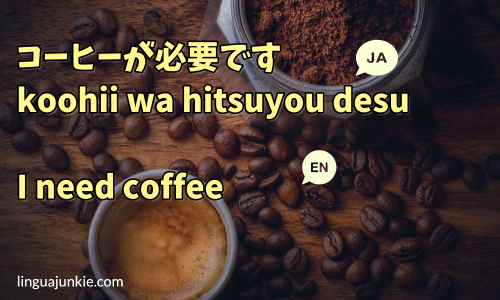
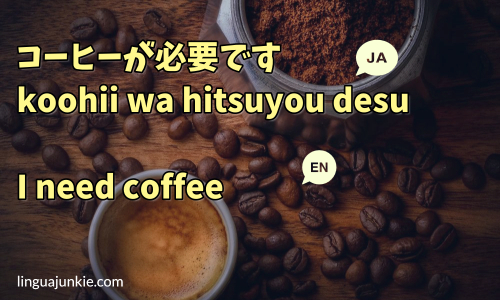
- I need coffee.
- コーヒーが必要です。
- Koohii ga hitsuyou desu.
- I need water.
- 水が必要だ。
- Mizu ga hitsuyou da.
- I need help.
- 助けが必要だ。
- Tasuke ga hitsuyou da.
- I need time.
- 時間が必要だ。
- Jikan ga hitsuyou da.
- I need money.
- お金が必要だ。
- Okane ga hitsuyou da.
- I need a break.
- 休憩が必要だ。
- Kyuukei ga hitsuyou da.
Oh, and in case you want to say it in the negative…
- I don’t need you.
- 君が必要ない。
- Kimi ga hitsuyou nai.
- I don’t need to learn Japanese.
- 日本語を学ぶ必要がない。
- Nihongo wo manabu hitsuyou ga nai.
- I don’t need to study Japanese.
- 日本語を勉強する必要がない。
- Nihongo wo benkyou suru hitsuyou ga nai.
- I don’t need anime.
- アニメが必要ない。
- Anime ga hitsuyou nai.
- I don’t need water.
- 水が必要ない。
- Mizu ga hitsuyou nai.
- I don’t need help.
- 助けが必要ない。
- Tasuke ga hitsuyou nai.
- I don’t need time.
- 時間が必要ない。
- Jikan ga hitsuyou nai.
- I don’t need money.
- お金が必要ない。
- Okane ga hitsuyou nai.
- I don’t need coffee (formal)
- コーヒーが必要じゃないです。
- koohii ga hitsuyou janai desu.
- I don’t need a break.
- 休憩が必要ない。
- Kyuukei ga hitsuyou nai.
- I don’t need a receipt.
- レシートは要りません。
- Reshiito wa irimasen.
- I don’t need anything.
- 何も要らない。
- Nani mo iranai.
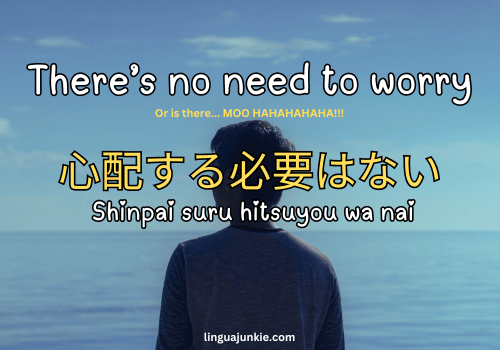
- There’s no need to worry.
- 心配する必要はない。
- Shinpai suru hitsuyou wa nai.
FAQ: Saying “Need” in Japanese
Q: What’s the most basic way to say “I need something” in Japanese?
The simplest way is using “irimasu” (要ります) for tangible things. Just follow the pattern: [thing you need] + ga + irimasu. For example, “Mizu ga irimasu” (水が要ります) means “I need water.”
Q: What’s the difference between “iru” and “hitsuyou”?
“Iru” (要る) is used for concrete, tangible things like objects, money, or time. “Hitsuyou” (必要) expresses necessity in a more abstract or formal way, and can apply to both physical and abstract needs. “Hitsuyou” is generally more versatile and commonly used in everyday speech.
Q: Do Japanese people actually use “irimasu” in conversation?
Yes, but it’s most common in service situations… like when a cashier asks if you need a bag. In casual conversation, Japanese speakers often use other expressions like “hitsuyou,” “hoshii” (want), or indirect phrases like “~nakereba naranai” (have to). “Iranai” (don’t need) is actually heard more often than “irimasu” in daily life.
Q: How do I say “I don’t need” in Japanese?
The casual form is “iranai” (要らない) or “hitsuyou nai” (必要ない). The polite versions are “irimasen” (要りません) and “hitsuyou arimasen” (必要ありません). You’ll hear “iranai” very frequently when declining things politely.
Q: What’s the difference between “need” and “want” in Japanese?
“Need” uses “iru” or “hitsuyou,” while “want” uses “hoshii” (欲しい) for things or “~tai” (~たい) for actions. However, the line can be blurry in casual conversation, and Japanese speakers sometimes use “hoshii” even when they technically mean “need.”
Q: What’s the difference between 必要 and 必要がある?
Both mean “need,” but:
- 必要 describes something as necessary.
- 必要がある emphasizes that there is a requirement or obligation.
- 必要がある often sounds more formal or explanatory.
Q: Is it okay to translate “need” directly into Japanese?
Not always. Japanese often avoids direct expressions of need, especially in emotional or social situations. Choosing the right structure depends on context, relationship, and tone. However, if your Japanese is not up to par, don’t worry about making mistakes. Native speakers will notice that you’re trying and understand what you intend to say.
Read This Last.
I hope you got what you… needed… from this guide.
Mostly it’s either “iru” or “hitsuyou.”
And I got what I needed from you … teaching you how to say need in Japanese.
Now, I need you to leave me a comment and tell me what you need… in Japanese.
Just don’t be too needy. Noone likes neediness.
– The Main Lingua J (the J stands for Junkie)